
Swelling Behind the Knee: Causes and When to Seek Care
A lump behind the knee may be a Baker’s cyst, but new calf swelling needs urgent assessment. Learn the warning signs and sensible next steps.
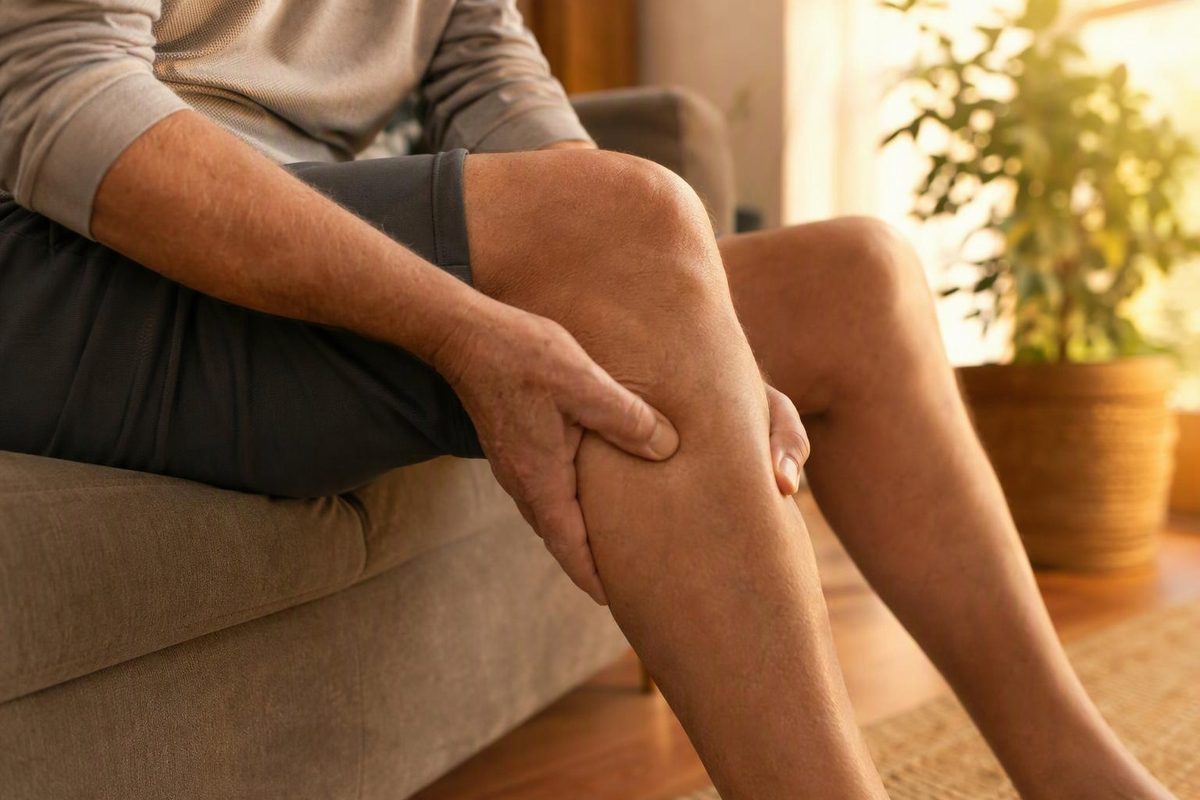
Swelling behind the knee can come from a Baker’s cyst—a pocket of joint fluid that forms a lump at the back of the knee. It may cause fullness, aching or tightness when you bend your leg. But the location alone does not establish the cause, and swelling that spreads into the calf needs particular attention. AAOS explains the symptoms and causes of Baker’s cysts.
The first useful distinction is whether you have a stable, localized lump or new, worsening swelling involving the lower leg.
When swelling needs urgent care
Seek emergency help if leg pain or swelling occurs with breathlessness or chest pain. These can be signs of a pulmonary embolism—a blood clot that has travelled to the lungs. Call your local emergency number rather than driving yourself. NHS DVT guidance.
Get urgent medical assessment today if:
- You develop new swelling in one calf or leg, or leg pain or swelling suddenly worsens—especially with warmth, bruising, or red or darkened skin.
- Your knee is very painful, badly swollen or changed in shape, or you cannot move it or bear weight.
- Your knee physically locks or gives way.
- Your knee is hot or red and you have a fever or feel shivery or unwell.
A ruptured Baker’s cyst can leak fluid into the calf and resemble deep vein thrombosis (DVT), a blood clot in a deep vein. You cannot reliably distinguish these by symptoms alone—even if you already know you have a cyst. A hot, red knee with fever can indicate infection. These patterns need assessment, not a trial of exercises or icing alone. NHS Baker’s cyst advice, DVT guidance and knee-pain guidance.
Tell the clinician about recent surgery, hospitalization, prolonged immobility, a journey lasting more than four hours, or any previous DVT. These increase clot risk, although DVT can also occur without an obvious reason. NHS DVT risk factors.
Why a Baker’s cyst develops
Your knee contains synovial fluid, which lubricates the joint. When a joint problem causes excess fluid production, some fluid can pass through a one-way opening into a sac behind the knee, making it bulge.
In adults, associated problems include osteoarthritis, rheumatoid arthritis and injuries such as a meniscus tear. A meniscus is one of the cartilage cushions inside the joint. A cyst therefore may reflect a problem within the knee rather than an isolated lump. In children, there may be no identifiable underlying cause. AAOS Baker’s cyst guidance.
A Baker’s cyst may feel like a soft lump and cause stiffness, difficulty bending or aching after walking. Some cause no discomfort. These clues make a cyst a possibility, not a diagnosis. NHS symptoms guidance.
If pain is more prominent than swelling, our guide to ache or pain behind the knee covers other symptom patterns.
How the cause is checked
Book a medical appointment for a new or unexplained lump, even if it is painless. A clinician will examine the knee and leg and ask about injuries, joint symptoms and changes in the swelling. NHS appointment advice.
Testing depends on the findings:
- Ultrasound can show whether a lump is fluid-filled or solid. When DVT is suspected, ultrasound is used to assess blood flow through the veins.
- MRI may help identify an underlying meniscus tear or another soft-tissue problem.
- X-rays do not show the cyst itself, but may reveal arthritis-related changes.
Not everyone needs every scan. AAOS imaging guidance and NHS DVT diagnosis guidance.
What helps once a cyst is confirmed
For a confirmed Baker’s cyst without urgent symptoms, initial care is usually nonsurgical. Reduce activities that aggravate it, particularly running or other high-impact exercise. Rest the knee, elevate the leg and apply a cold pack wrapped in a towel for around 10 minutes at a time. A pharmacist can advise whether a pain medicine is suitable for you. AAOS treatment guidance and NHS self-care advice.
For practical cold-pack precautions, see how to choose and use a cold pack.
Treatment may also involve physiotherapy, a steroid injection or clinician-performed fluid drainage. Addressing the underlying knee condition is often important; surgery to remove the cyst is uncommon. Some cysts settle without treatment, while others persist for months or longer. The useful question is not simply “How do I shrink the lump?” but “What is causing my knee to produce extra fluid?” NHS treatment guidance.
This article is general education, not a diagnosis or an individual treatment plan.