
Knee Joint Pain at Night: Causes, Relief and When to Seek Care
Understand knee pain at night, which symptoms need medical care, and practical ways to ease discomfort without assuming a diagnosis.
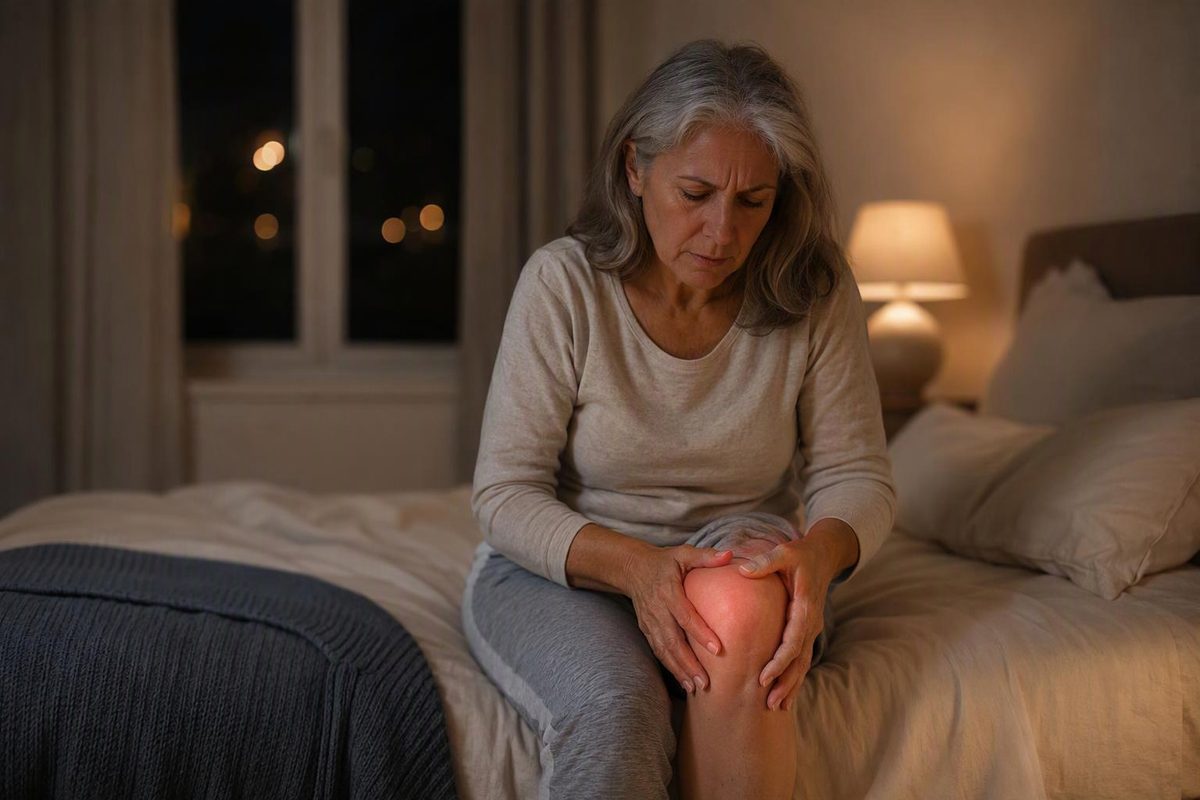
Knee joint pain at night can occur with arthritis, but it does not establish that diagnosis. Pain after a busy day, stiffness after resting, and discomfort when your knees press together are different patterns worth noticing.
The first question is whether this is a mild, settling ache or new, worsening pain with swelling, illness or lost function.
When nighttime knee pain needs medical care
Seek urgent medical advice now if:
- Your knee is very painful, you cannot move it or put weight on it, or it is badly swollen or has changed shape.
- The knee locks or gives way.
- You develop sudden severe pain with a hot, swollen or red knee, or knee pain with fever or feeling hot, cold or shivery. A joint infection is one possible cause, and not everyone with a joint infection has a fever.
These warning signs apply whether the pain occurs during the day or at night. Use your local urgent-care service; in the UK, NHS 111 can advise where to go. NHS knee-pain guidance and septic arthritis guidance
Book a medical appointment if pain regularly wakes you, is getting worse, or has not improved after a few weeks of self-care. Do not wait several weeks if sleep is repeatedly disrupted. Arthritis UK recommends assessment for regularly waking in pain; NHS knee-pain guidance advises assessment if symptoms do not improve within a few weeks.
Unexplained bone pain—particularly pain worse at night—or a new lump or unexplained weight loss also needs medical assessment. These symptoms do not establish cancer, but should not be dismissed as routine joint soreness. NHS guidance on bone symptoms
What the accompanying symptoms can tell you
The location, onset and daytime pattern are more useful than the clock alone. These are clues to discuss with a clinician, not a way to diagnose yourself.
| Pattern alongside nighttime pain | Possible explanation |
|---|---|
| Gradual pain, difficulty with stairs or walking, and stiffness after rest that eases within about 30 minutes | Knee osteoarthritis is one possibility. It can cause pain that disturbs sleep. |
| Pain after a recent increase in running, jumping, walking or other activity | Overuse-related pain, a strain or tendon irritation may be involved. Pain between the kneecap and shin can occur with tendon problems. |
| A sudden, very painful, hot or red knee | Gout and joint infection can produce similar symptoms. Do not assume this is an ordinary activity flare. |
The osteoarthritis pattern is described by AAOS and an NHS-provider musculoskeletal service; the injury, tendon and sudden-pain patterns are covered in NHS knee-pain guidance.
Pain felt around the knee is not necessarily coming from inside the joint. For example, bursitis affects a small fluid-filled cushion near the joint and may cause pain and swelling with kneeling or bending. NHS knee-pain guidance describes this pattern; our guide to the knee bursa explains the distinction.
Poor sleep can also make existing pain harder to tolerate. Arthritis UK describes a two-way problem: pain disrupts sleep, while insufficient good-quality sleep can lower your pain threshold. That does not mean the pain is imaginary. Arthritis and sleep
What to try tonight if there are no warning signs
For a mild ache that is improving, try a few simple adjustments rather than forcing a stretch or adding a hard workout before bed:
- Change the pressure on the knee. When lying on your non-painful side, place a pillow between your knees and rest the upper leg on it. Keep the position comfortable rather than forcing the knee straight or deeply bent.
- Try a short heat or cold application while awake. Apply a wrapped pack for up to 15 minutes; never put heat or ice directly against your skin. Remove it after the session, before going to sleep.
- Reduce the activity that aggravated it temporarily. If a longer walk or extra stairs preceded the ache, scale that activity back. Continue comfortable movement rather than keeping the knee still all day, and build activity back gradually.
- Ask about suitable pain relief. A pharmacist or clinician can advise on an appropriate short-term option, considering your medicines and health conditions.
These measures follow University Hospitals Coventry and Warwickshire’s knee self-care advice. They may improve comfort, but do not identify or treat every possible cause.
If you already have knee osteoarthritis, exercise is part of longer-term management—not a guaranteed bedtime fix. AAOS guidance recommends exercise to improve pain and function. A gentle knee-arthritis exercise routine can help you plan a cautious start.
What to record before an appointment
Note the exact location, whether one or both knees hurt, when it started, and whether pain wakes you or begins after you are already awake. Record swelling, morning stiffness, recent injury or activity changes, and whether changing position helps.
A brief pain-and-sleep diary can reveal useful patterns. Bring it, along with your medication list, so the discussion covers both the knee symptoms and the disrupted sleep. Arthritis UK’s sleep-diary advice