
Knee Bursitis: Symptoms, Treatment and When to Seek Care
Learn where knee bursitis hurts, how to ease mild symptoms, when swelling may signal infection and what to expect from treatment and recovery.
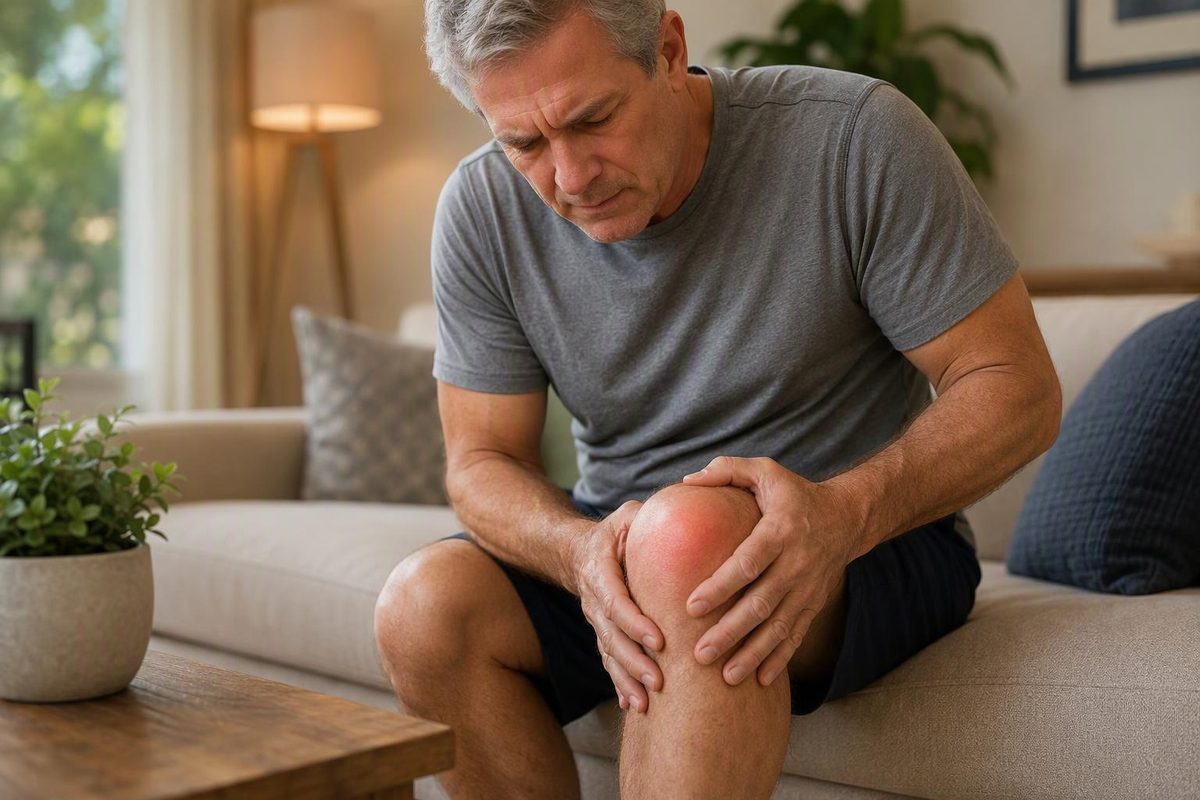
Knee bursitis is irritation and swelling of a bursa—a small, fluid-filled sac that reduces friction between nearby tissues. It can cause a tender swelling over the kneecap or pain on the inner side of the knee. The location helps guide an assessment, but pain or swelling alone cannot confirm bursitis. AAOS explains the role of knee bursae.
The first decision is whether symptoms are mild enough for short-term self-care or could indicate infection or another knee problem.
Where does knee bursitis hurt?
Two common patterns involve different bursae:
| Pattern | Possible type | Typical clues |
|---|---|---|
| Swelling directly over the front of the kneecap | Prepatellar bursitis | Often follows prolonged kneeling or a direct blow. The swelling may develop quickly and feel tender or warm. |
| Pain and tenderness on the inner side, roughly 2–3 inches (5–8 cm) below the knee joint | Pes anserine bursitis | Often develops gradually. Exercise, stairs or sitting with the knees bent for a long time may worsen it; local puffiness can occur. |
These patterns are described in AAOS guidance on prepatellar bursitis and pes anserine bursitis.
Repeated pressure is a common trigger for kneecap bursitis. Inner-knee bursitis can be associated with repetitive activity, including running, and can occur alongside knee osteoarthritis. Gout or rheumatoid arthritis can also inflame a bursa.
Not all knee swelling is bursitis. Fluid inside the knee joint, arthritis and skin infection can look similar. AAFP reviews these look-alike conditions. Inner-knee bursitis can also resemble a meniscus injury, ligament sprain or stress fracture, as AAOS explains. A localized swelling is a clue—not a home diagnostic test. For the broader distinction, see what fluid on the knee can mean.
When to seek medical care
Seek same-day medical advice if the swelling is increasingly hot or red, especially with a nearby cut, scrape or draining wound, fever, chills or feeling unwell. Bacteria can enter a superficial bursa through damaged skin. Infection needs prompt treatment, and not having a fever does not rule it out. Redness can be harder to see on brown or black skin, so also notice warmth and tenderness. AAFP discusses infection clues; NHS guidance notes differences in how redness appears.
Seek urgent assessment if you cannot move the knee or bear weight, have very severe pain, marked swelling or a changed knee shape, or the knee locks or gives way. These symptoms should not simply be attributed to bursitis. NHS knee-pain guidance lists these urgent signs.
What can you do for mild symptoms?
If symptoms are mild and none of the warning signs above apply:
- Remove the pressure or activity that aggravates it. Avoid kneeling on the sore area. Reduce running, hills or stair workouts if they increase symptoms rather than trying to push through.
- Use a wrapped ice pack. Apply it for around 10 minutes at a time, repeating every few hours during the day. Do not place ice directly on skin.
- Elevate the leg when resting if the front of the knee is swollen.
- Consider pain relief if suitable for you. Paracetamol/acetaminophen or ibuprofen may help. Follow the label; ask a pharmacist if you have medical conditions, take other medicines or are unsure what is safe.
Knee pads and regular breaks can reduce kneeling pressure when you return to work or gardening. They are not a reason to continue an activity that remains painful. These measures are supported by NHS bursitis advice and AAOS kneecap-bursitis guidance.
What treatment might a clinician recommend?
Assessment usually starts with your history and a knee examination. Imaging may help if another injury is suspected. If infection is a concern, a clinician may take fluid from the bursa with a needle—called aspiration—for testing.
Drainage is not automatically needed for every swollen bursa. For kneeling-related superficial bursitis without infection, routine aspiration can introduce infection, and evidence for routine steroid injections is limited. Infected bursitis generally requires antibiotics; surgery is reserved for selected persistent, recurrent or treatment-resistant cases. AAFP explains these treatment distinctions.
For confirmed pes anserine bursitis, treatment is usually nonsurgical. A clinician or physiotherapist may recommend activity changes and targeted stretching. AAOS outlines treatment options.
How long does recovery take?
Bursitis often settles within a few weeks, but that is not a guaranteed deadline for every cause. Arrange an assessment if symptoms have not improved after 1–2 weeks of self-care. Seek advice sooner if they are worsening; do not repeatedly extend rest without checking the diagnosis. NHS bursitis guidance gives the 1–2-week review threshold.
As symptoms settle, build activity back gradually instead of immediately returning to the kneeling pressure or training load that aggravated the knee. If swelling repeatedly returns, the next useful question is whether the trigger remains—or whether the original diagnosis needs reconsidering.