
Cold Packs for Knee Pain: How to Choose and Use One
Learn which cold pack to choose, how long to apply it, skin-safety checks, and when knee pain or swelling needs medical care rather than more icing.
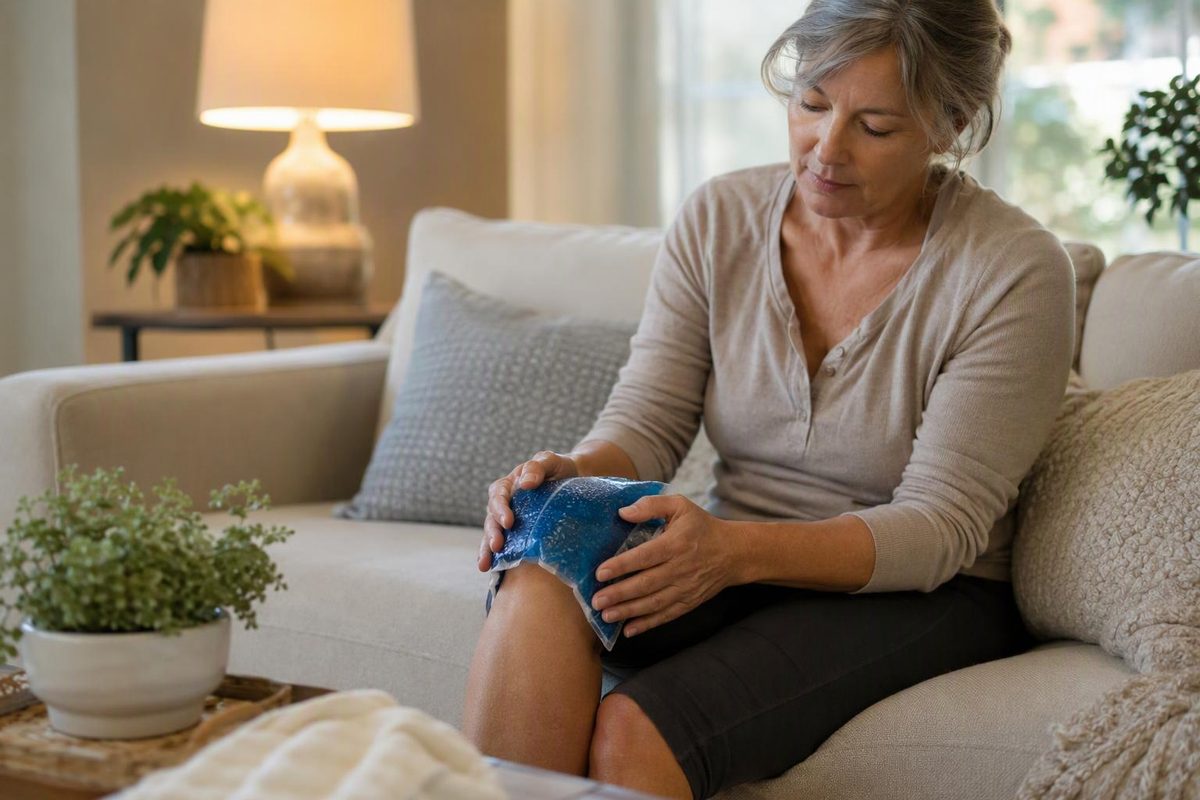
A cold pack can help ease knee pain and swelling, but you do not need an expensive knee-shaped wrap to start. A bag of frozen peas wrapped in a towel is an option in the NHS knee-pain guidance, which recommends applying cold for up to 20 minutes every 2–3 hours.
The aim is symptom relief—not to keep the knee continuously cold or prove that an injury has healed. Here is how to choose a practical pack and use it safely.
Which cold pack should you choose?
Start with something you can position comfortably over the painful area while keeping a protective towel between the pack and your skin.
| Option | What to consider |
|---|---|
| Bag of frozen peas or other vegetables | A simple starting option. Keep a separate bag in the freezer for this purpose. |
| Ice in a sealed plastic bag | Useful if you already have ice. Check for holes, squeeze out excess air and seal securely to avoid leaks. |
| Reusable cold pack or knee wrap | Check the instructions for cooling, the required skin barrier and application time. If it has straps, make sure you can loosen or remove it easily to inspect your skin. |
The homemade options and the need to follow purchased-pack instructions are described by Gloucestershire Hospitals NHS Foundation Trust.
For a reusable pack, prioritize practical fit over marketing claims: can it cover the sore area without being forced into position, and can you check the skin underneath? A wrap may be convenient, but its shape alone is not evidence that it provides better pain relief.
How to apply a cold pack safely
For adult home use, provided you have normal circulation and skin sensation:
- Sit or lie comfortably. Rest the knee in a supported position. After a recent minor injury, elevating the leg while resting may help with swelling.
- Use a towel barrier. Never put ice or a frozen pack directly on bare skin. Follow the pack’s instructions about its cover or barrier.
- Set a timer. Start with a short session—around 10 minutes—and do not exceed 20 minutes. For a small, bony area, keep it to 10–15 minutes. Follow a shorter limit if the product instructions specify one.
- Check your skin every five minutes. Remove the pack immediately for blue or blotchy skin, pain from the cold, or excessive numbness. Stop if blistering or increasing discoloration develops.
- Leave 2–3 hours between sessions. Repeat only if it helps; do not leave the pack on continuously. Stay awake so you can monitor the skin and remove it on time.
Do not self-treat with cold if you have poor circulation or reduced sensation, because you may not detect skin injury reliably. Do not place a pack over an open wound or graze. After knee surgery, follow your surgical team’s instructions rather than this general routine.
These precautions draw on Gloucestershire Hospitals’ ice-treatment advice and NHS inform’s knee guidance.
When cold helps—and when heat may suit better
Cold is a reasonable option for discomfort and swelling after a minor injury or activity. For diagnosed knee osteoarthritis, it is an optional comfort measure: the 2019 American College of Rheumatology/Arthritis Foundation guideline conditionally recommends local heat or cold, noting varied treatment methods and short-lived benefits. Exercise receives a stronger recommendation.
If established arthritis symptoms are mainly stiffness or an ache without new swelling, gentle warmth may feel better. Avoid heat on a newly injured, warm or swollen knee, and protect the skin with a barrier. Mass General Brigham explains this cold-versus-heat distinction.
A pack should support—not replace—appropriate activity changes and rehabilitation. If you have diagnosed osteoarthritis, our gentle arthritis exercise routine offers a starting point for discussing movement with your clinician.
When more icing is not the answer
Seek urgent medical advice if the knee is very painful, you cannot move it or bear weight, it is badly swollen or misshapen, or swelling appears immediately after a twisting injury. A significant recent fall or direct blow, locking or giving way also warrants urgent advice. A hot, red knee with fever or feeling shivery needs urgent assessment. These warning signs follow NHS knee-pain advice and NHS inform.
A newly hot, swollen or tender knee—especially without an obvious injury—warrants prompt medical advice even without fever. Arrange an appointment if pain is not improving within a few weeks, or sooner if it worsens. Feeling better after a cold pack does not rule out a problem that needs treatment.