
Knee Pain: Cold or Heat? How to Choose
Cold may ease knee pain with swelling; gentle heat may help stiffness. Learn safe application times and which symptoms need medical care.
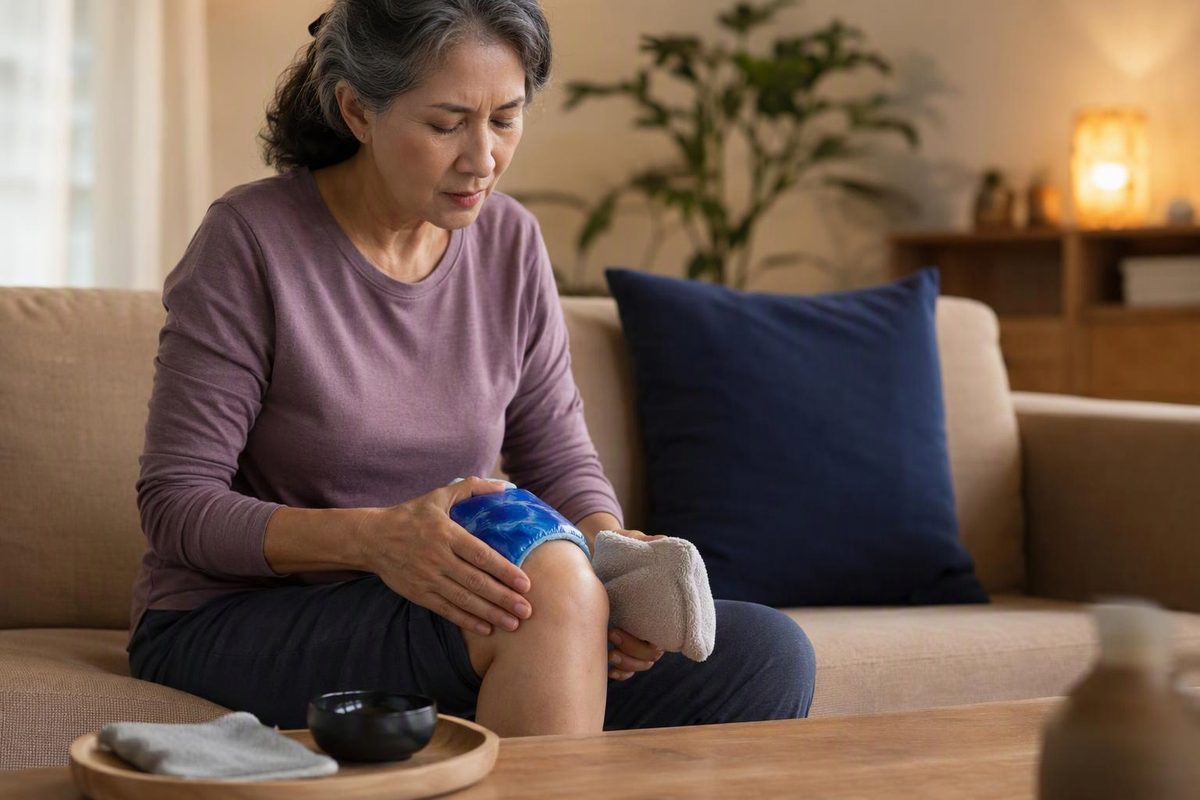
Try cold for a newly injured or swollen knee; try gentle heat for stiffness when the knee is not hot or swollen. Both are options for short-term symptom relief—not a way to diagnose the cause or confirm that an injury has healed. NHS guidance supports ice for knee pain and swelling, while HealthLink BC describes heat as helpful for osteoarthritis pain and stiffness related to inactivity.
Match the treatment to how your knee feels
| Knee-pain pattern | Sensible first choice |
|---|---|
| Recent twist, bump or strain with soreness and swelling | A wrapped cold pack. Avoid heat on a fresh injury. |
| Established knee problem with soreness or swelling after activity | Try cold for comfort, and reassess the activity that aggravated it. |
| Stiffness after sitting or on waking, without heat or swelling | Try gentle warmth, especially if you have diagnosed osteoarthritis. |
| Diagnosed knee osteoarthritis without current warmth or swelling | Either may help; choose the one that feels more comfortable. |
Gloucestershire Hospitals’ guidance supports cold for recent soft-tissue injuries and heat for stiffness, while advising against heat on a new injury. For osteoarthritis, Mass General Brigham recommends cold after aggravating activity and avoiding heat on joints that are swollen or warm to the touch.
Do not switch to heat just because a set number of days has passed. Avoid heat during the first two to three days after a new knee injury, and do not use it to treat a knee that remains hot or swollen. The symptom pattern matters more than the calendar. This clinician-reviewed leaflet explains that heat can increase swelling in a new injury.
How to use cold safely
Use a commercial cold pack or a bag of frozen peas wrapped in a towel—not directly against your skin. Follow the pack’s instructions if they specify a shorter application time.
- Start with 10–15 minutes; do not exceed 20 minutes per session.
- Check the skin underneath the pack every five minutes.
- Remove the pack immediately if the skin becomes blue, blotchy or painful, or you develop excessive numbness.
- If needed for a recent injury, repeat every two to three hours while awake, rather than keeping the pack on continuously.
These timings and skin checks follow NHS knee-pain advice and Gloucestershire Hospitals’ ice-treatment precautions.
For pack types and fit, see our guide to choosing and using cold packs for knee pain.
How to use heat safely
Choose a warm shower, a comfortably warm pack or a heating pad on a low setting. Gentle warmth is enough; it should not feel hot. Put a towel between a heat pack and your skin, check the skin regularly, and try a session of 15–20 minutes. Do not fall asleep with a heating pad on. These precautions are supported by Gloucestershire Hospitals, Mass General Brigham and HealthLink BC.
For either treatment, avoid damaged skin and areas with reduced sensation or known poor circulation. If you cannot reliably feel temperature changes, ask a clinician about safer options rather than experimenting with hotter or colder packs. Safety guidance advises against heat or cold in these circumstances.
What if you have knee arthritis?
With diagnosed knee osteoarthritis, warmth may help stiffness after inactivity, while cold may be more comfortable during a painful flare. You can choose according to your symptoms and comfort rather than alternating them on a fixed schedule.
The 2019 American College of Rheumatology/Arthritis Foundation guideline conditionally recommends locally applied heat or cold for osteoarthritis. That means it is an option to discuss, not a treatment everyone needs; studies used different methods and benefits were short-lived. The same guideline strongly recommends exercise for knee osteoarthritis, so packs are best viewed as an addition to your management plan, not a replacement for it. Our gentle arthritis exercise routine offers a starting point.
When a pack is not the next step
Seek urgent medical advice if your knee is very painful, you cannot move it or bear weight, it is badly swollen or deformed, or it locks or gives way. Redness or heat around the knee with fever or feeling shivery can signal infection and needs urgent assessment. These are NHS warning signs, not reasons to keep testing heat versus cold.
Arrange an assessment if knee pain is not improving within a few weeks. Even when a pack helps temporarily, persistent pain needs a plan based on its cause—not simply longer or more frequent applications.