
How Do You Choose a Patella Stabilizer Knee Brace?
Selection turns on the problem, support direction and amount, activity and material tolerance. It must stay put without causing pressure or restricting circulation.
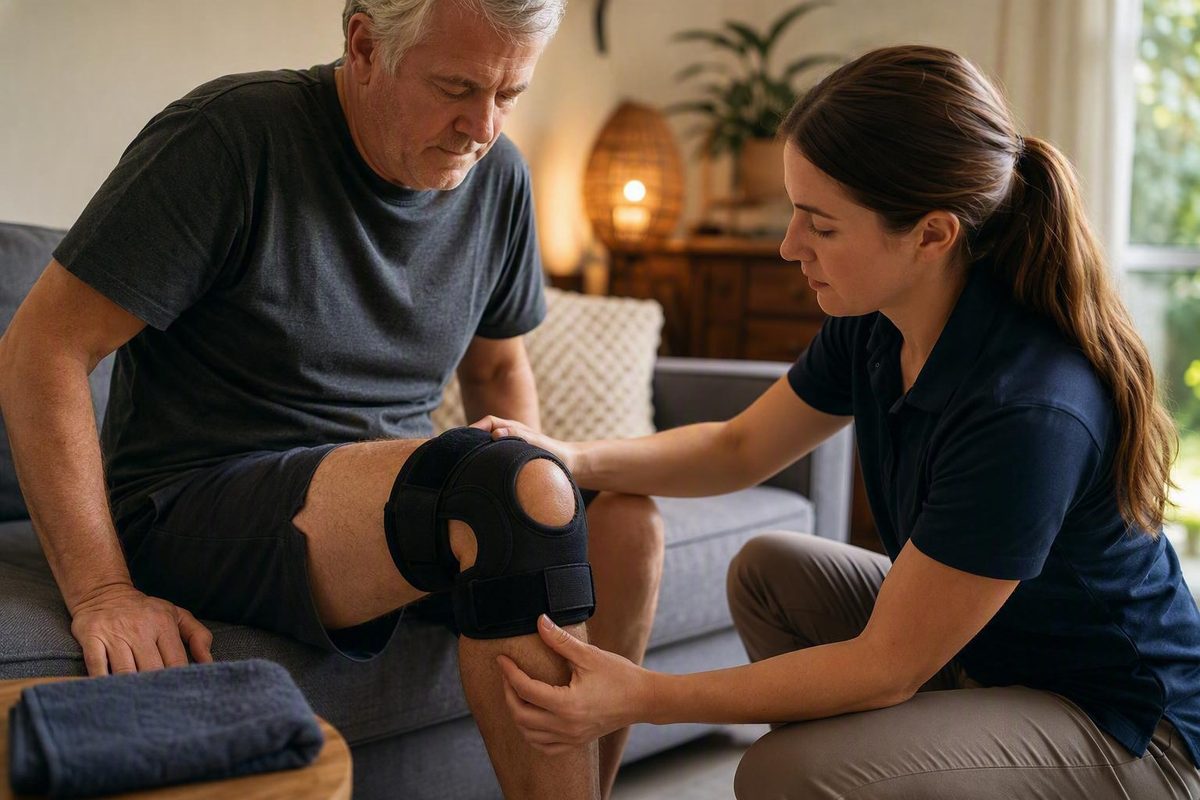
By Sam Whitaker, physical-therapy writer Updated August 14, 2026
A patella stabilizer knee brace is not one standardized product. The label can describe anything from a thin compression sleeve with a foam ring to a side-specific brace with corrective straps and removable hinges.
More features are not necessarily better. The right choice depends on the problem the brace is meant to address, the direction and amount of support required, the user’s activity, material tolerance, and whether the brace stays positioned without causing pressure or restricting circulation.
This guide is educational rather than personalized medical advice. Knee Pain Zone’s medical-information notice explains that its articles provide general education, not treatment. Product specifications and prices below were captured from manufacturer pages; safety guidance comes from medical or orthopedic sources. No compared product was independently tested or ranked for effectiveness.
What a patella stabilizer is—and what it cannot promise
The patella is the kneecap at the front of the knee. A patellofemoral brace is designed to support the kneecap and front of the knee. Depending on its construction, it may provide compression, direct support around part of the kneecap, limit unwanted movement, or add broader structure to the knee.
A typical patella stabilizer combines stretch or compression material with one or more of these components:
- An opening over the kneecap
- A circular foam or silicone ring
- A horseshoe-shaped support
- A medial or lateral J-shaped buttress
- Adjustable upper, lower, or diagonal straps
- Flexible side stays or springs
- Rigid or semi-rigid hinges
- Textured material or anchoring straps intended to resist migration
These components serve different functional roles. A soft ring surrounds the kneecap. A J-buttress applies support from a particular direction. Straps adjust tension and help anchor the brace. Stays, springs, and hinges add structure along the sides of the knee.
Manufacturers commonly market these products for patellofemoral pain, patellar maltracking, subluxation, previous dislocation, and kneecap instability. Those commercial indications do not diagnose the buyer or establish that a product is effective for everyone.
Product pages can document materials, sizes, straps, hinges, care instructions, and displayed prices. They are not independent evidence that a brace:
- Permanently corrects kneecap tracking
- Heals cartilage, ligaments, tendons, or a meniscus
- Prevents an initial or recurrent kneecap dislocation
- Makes an activity safe after injury
- Replaces rehabilitation or strengthening
Medically reviewed Cleveland Clinic guidance says research has not conclusively shown that brace use itself prevents injury. It also recommends evaluation for new or worsening knee pain so the cause and suitable brace type can be identified before relying on a knee brace.
The realistic goal is narrower: choose a device that performs the required support role, fits securely, remains tolerable during approved movement, and complements appropriate assessment and rehabilitation.
Start with the problem, not the product label
Front-of-knee symptoms do not automatically mean that a patella stabilizer is the right purchase. A seller’s condition list cannot distinguish among them.
Use the following scenarios as shopping filters, not as a self-diagnosis.
General front-of-knee discomfort
This may feel like a diffuse ache around or behind the kneecap, perhaps aggravated by bending, squatting, stairs, or prolonged sitting. Someone in this category might compare a basic compression sleeve with a soft patella-ring sleeve.
The important question is whether the goal is flexible, low-bulk support or whether a clinician has identified a need for directional kneecap control. Pain location alone cannot answer that question.
Assessment is preferable when discomfort is new, worsening, associated with increasing swelling, or has no clear cause. It is also reasonable when repeated self-management has not helped.
Pain focused at the patellar tendon
A patellar tendon strap is a narrow band worn below the kneecap. It leaves most of the knee uncovered and is intended to apply localized pressure around the patellar tendon.
That differs from a stabilizer, which usually covers more of the knee and uses a ring, buttress, or straps around the kneecap. Retail guidance broadly associates tendon straps with tendon-focused complaints and stabilizers with kneecap support, but this commercial distinction does not determine which device is appropriate for an individual without identifying the cause of the symptoms.
Persistent tendon-area pain, reduced function, or symptoms that interfere with ordinary activity deserve assessment rather than an assumption that the problem is routine tendinopathy.
Suspected tracking trouble
Some stabilizers use a horseshoe, J-buttress, or diagonal corrective strap to apply support from a particular direction. This may be relevant when a clinician or experienced fitter has identified a tracking pattern.
Do not infer the required direction from a generic symptom list. A brace labeled “lateral J” has a specific construction; the label does not establish that lateral support is correct for every person with front-of-knee pain.
If you do not know whether the patella requires medial, lateral, or more evenly distributed support, ask a qualified healthcare professional or brace fitter.
Recurrent slipping, subluxation, or instability
A feeling that the kneecap repeatedly slips, shifts, or threatens to come out of place requires more caution than uncomplicated discomfort. The same applies to a previous dislocation, substantial giving way, or continued instability after an injury.
Do not use a drugstore sleeve as a substitute for assessment in this situation. The appropriate approach may depend on the diagnosed instability pattern, injury stage, anatomy, activity, and whether broader joint control is required. A clinician may suggest a directional buttress, a more structured brace, or a different plan.
Stop self-selection and seek medical advice if you have:
- Severe or worsening pain
- Increasing swelling
- Blue, purple, or unusual discoloration
- Tingling or persistent numbness
- Inability to move the knee or leg
- A locked knee
- Repeated giving way
- Significant swelling after an injury
These symptoms can indicate a problem that should not be managed by repeatedly adjusting an over-the-counter brace. Clinical brace guidance also identifies discoloration, persistent numbness, reduced function, skin breakdown, temperature differences between the legs, and instability despite bracing as reasons for prompt review rather than continued self-fitting.
Brace choice ultimately depends on the diagnosis, activity, recovery stage, required movement control, skin tolerance, leg shape, and fit—not merely the location of pain.
Patella stabilizer vs. strap, sleeve, and hinged brace
The clearest way to compare knee supports is by functional role rather than seller terminology.
| Category | Coverage and main support element | Relative bulk and flexibility | Movement control | Adjustment complexity | Broad seller-described role |
|---|---|---|---|---|---|
| Patellar tendon strap | Narrow band below the kneecap | Very low bulk; most of the knee remains uncovered | Minimal | Low | Localized patellar-tendon pressure |
| Basic compression sleeve | Continuous elastic material over the knee | Low bulk; generally flexible | Low | Low | General compression and knee awareness |
| Soft patella-ring sleeve | Sleeve with an opening or soft ring around the kneecap | Low to moderate bulk; flexible | Low | Low | General front-of-knee and kneecap support |
| Adjustable wraparound stabilizer | Wrap panels, patellar ring or buttress, and adjustable straps | Moderate bulk; tension can be altered | Low to moderate | Moderate | Adjustable compression and patellar support |
| J-buttress brace | Sleeve or wrap with a directional J-shaped support | Moderate bulk; firmer on one side | Moderate directional control | Moderate; side and placement matter | Identified tracking or instability patterns |
| Side-stay model | Sleeve or wrap with flexible or rigid side supports | Moderate bulk; less flexible than a plain sleeve | Moderate | Moderate | Patellar support plus broader side structure |
| Hinged brace | Larger brace with jointed side supports | Highest bulk; may interfere with clothing or flexion | Moderate to high, depending on design | High | Broader stabilization or controlled motion |
A tendon strap and a patella stabilizer are not interchangeable. The strap sits below the kneecap and leaves most of the joint uncovered. A stabilizer generally covers the knee and uses a ring, buttress, straps, or another structure to support the patella.
A basic sleeve is the simplest option. It may suit someone whose approved goal is flexible, low-profile support.
Stays and hinges add structure. Hinges are not automatically necessary for isolated front-of-knee discomfort and should not be treated as a universal upgrade.
Open versus closed patella
An open-patella brace has a cutout over the kneecap and may include a padded ring or directional buttress around that opening. A closed-patella sleeve places continuous material over the front of the knee.
Manufacturer-retailer guidance generally positions open designs as targeted kneecap supports and closed sleeves as continuous-coverage options. This describes intended design roles, not proven comparative superiority between open- and closed-patella braces.
In practical terms, compare:
- Whether direct fabric pressure over the kneecap is comfortable
- Whether an opening stays centered during movement
- Whether a ring or opening edge creates pressure
- Whether closed material bunches during deep flexion
- Whether the required support is general or directional
Neither construction is universally better. The suitable design is the one that matches the identified support requirement and stays correctly positioned during permitted activity.
How rings, J-buttresses, straps, stays, and hinges differ
Product names often emphasize features without explaining their functional roles.
| Component | Where it is found | Functional role | Main tradeoff or selection issue |
|---|---|---|---|
| Patellar opening | Cutout over the kneecap | Provides a positioning reference and leaves the kneecap exposed | Must remain centered; edges may irritate or migrate |
| Foam or silicone ring | Surrounding the opening | Distributes support around the kneecap | Can add pressure, warmth, or bulk |
| Horseshoe support | Around part of the patella | Applies support along selected kneecap borders | Orientation must match the intended role |
| J-shaped buttress | Curved support along one side and below the patella | Applies directional support | Side and direction should not be guessed |
| Corrective strap | Crosses or pulls around the brace front | Adjusts directional tension | Excess tension may rotate the brace or create pressure |
| Compression panel | Sleeve body or wraparound fabric | Creates a close fit and anchors other components | May feel warm or restrictive |
| Anti-migration feature | Gripper strip, textured panel, elastic edge, or anchoring strap | Resists sliding and rotation | May irritate sensitive skin |
| Side stay | Vertical support beside the knee | Adds side structure while allowing bending | May dig in if poorly aligned |
| Spring | Flexible support along either side | Provides lighter side structure than a rigid hinge | Can still create pressure when poorly fitted |
| Hinge | Jointed support on one or both sides | Adds broader joint control and may guide bending | Increases weight, bulk, and fitting complexity |
A circular ring mainly surrounds the patella. A horseshoe or J-buttress supports selected edges. A corrective strap alters tension, while stays, springs, and hinges extend the brace’s role beyond the kneecap.
Adjustable does not mean self-diagnosing
A removable or repositionable buttress provides adjustability. It does not tell the buyer where that support belongs.
Do not select medial or lateral buttress direction solely because:
- A product name sounds relevant
- A photograph shows support on one side
- A seller lists “maltracking”
- Another customer reports similar pain
- One direction feels tighter during a brief fitting
If that pattern has not been established, ask a clinician or experienced fitter.
More structure means more tradeoffs
A low-profile sleeve often fits more easily under clothing and permits greater freedom of movement. A brace with multiple straps, thick buttresses, rigid stays, and hinges can provide more structure, but may also cause:
- More heat and retained moisture
- Pressure at strap or buttress edges
- Bunching behind the knee
- More visible bulk
- Reduced flexion
- More complicated application
- Greater risk of incorrect positioning
Feature count is not evidence of better outcomes. Neither are price and customer ratings.
Check orientation before buying
Patella stabilizers may be:
- Bilateral: designed for either knee
- Universal: adjustable across a broad range or usable on either side
- Left-specific
- Right-specific
Side specificity is especially important with directional J-buttresses and shaped hinges. Confirm the selected side before ordering; do not assume the photograph shows the version in your cart.
Objective product examples: specifications, not a best-brace ranking
The examples below illustrate how construction, sizing, materials, and price vary. They are not a best-brace list, and the comparison does not establish clinical effectiveness.
Specifications captured August 14, 2026. Prices, stock, ratings, selectable sizes, materials, and care instructions can change. Confirm the current product page before buying.
| Product | Design and support elements | Captured size range | Orientation | Material information | Displayed price | Captured care instructions | Important limitations |
|---|---|---|---|---|---|---|---|
| Mueller Patella Stabilizer | Open-patella pull-on brace; adjustable upper and lower straps | Selectable XS–XXXL; the captured chart grouped some sizes and did not show clear ranges for every option | Bilateral | 60% neoprene, 15% nylon, 10% spandex, 10% steel, 3% POM, 2% nubuck | $61.99 | Cold hand wash with mild detergent; line dry; do not bleach, iron, or dry-clean | Neoprene may cause a reaction; captured sizing chart was incomplete |
| BioSkin Patella Stabilizer | One-millimeter, three-layer sleeve; foam patellar ring; upper and lower elastic straps; two flattened springs on each side | XS–5XL | Not clearly established in the captured material | Three-layer fabric; complete composition not captured | $88.00 | Hand wash cold; hang dry | Seller comfort and performance claims are not independent evidence; orientation and complete composition were unclear |
| EzyWrap model 535 | Hinged lateral-J design; repositionable silicone buttress; removable dual-axis hinges; condyle pads and anti-migration elements | XS–XXXL | Directional lateral-J design; verify side selection | Breathable, non-neoprene material; complete percentages not captured | $86.99 | Hinges described as removable for cleaning and maintenance; application instructions supplied with purchase | Buttress direction requires appropriate selection; captured stock language was inconsistent |
| DonJoy patella-brace category | Category included sleeves, removable buttresses, corrective straps, stays, and fixed or removable hinges | Varies by model | Bilateral and side-dependent designs vary | Varies by model | $48.99–$219.99 among products displaying prices | Varies by model | Category includes braces with different purposes; prices and ratings do not establish comparative effectiveness |
| Breg patellofemoral category | Category included basic supports, lateral stabilizers, open-back designs, hinged braces, and other patellofemoral products | Filters extended from very small sizes through 3XL, plus universal options | Universal, left-specific, and right-specific options | Category filters included Airmesh and neoprene | Not captured | Not captured | Category filters cannot establish the specifications of an individual brace |
The Mueller example also illustrates why a buyer should not guess when a sizing chart is incomplete. Its page displayed XS through XXXL as selectable sizes, but the captured measurement chart combined some nominal sizes and did not clearly cover every option.
BioSkin’s customer reviews contained both positive experiences and practical complaints about slipping, bunching, repositioning, and bulk during flexion. Those reports may identify fit themes, but neither favorable nor unfavorable reviews establish clinical effectiveness.
EzyWrap’s coding and reimbursement information concerns potential billing pathways. It does not prove that the brace works or guarantee insurance coverage.
It does not demonstrate better value for a particular knee. Likewise, a higher customer rating cannot prove that a brace treats the underlying problem, prevents recurrence, or will fit the next buyer.
Prioritize:
- Correct functional role
- Complete and understandable sizing information
- Appropriate buttress direction
- Side compatibility
- Material tolerance
- Movement and clothing compatibility
- Care requirements
- Return or exchange terms
- Availability of professional fitting
- Ability to stay centered without overtightening
Measure, position, and test the brace correctly
Brace sizing is specific to the brand and model.
1. Use the exact model’s measurement instructions
The chart may ask for circumference:
- Directly around the knee
- At the center of the kneecap
- A specified distance above the kneecap
- A specified distance below the knee
- At more than one location
Measure at the stated landmark with the leg in the specified position. Do not substitute a clothing size or a chart from another brace.
If your measurement falls between sizes, the chart combines several nominal sizes, or the landmark is unclear, contact the manufacturer, seller, clinician, or fitter. A loose brace may migrate; an undersized brace may create excessive pressure.
2. Follow model-specific application steps
Instructions differ among pull-on sleeves, wraparound braces, and hinged models. A common sequence is:
- Loosen or open all straps and fasteners.
- Sit with the knee slightly bent when practical.
- Slide on or wrap the brace without twisting it.
- Center the patellar opening, ring, or prescribed buttress around the kneecap.
- If hinges are present, align them with the sides of the knee joint.
- Fasten straps in the sequence specified by the manufacturer.
- Increase tension gradually rather than pulling one strap as tightly as possible.
- Recheck the opening, buttress, hinges, and stays after fastening.
Orthopedic fitting guidance recommends condition-specific brace selection and a fit that is snug without impairing circulation. It also warns against changing prescribed postoperative range-of-motion settings without direction from the treating clinician when fitting and using an orthopedic brace.
3. Aim for secure, not aggressively tight
The brace should resist slipping and rotation without causing pain, skin injury, sensory changes, impaired circulation, or unintended movement restriction.
Do not treat a “one-finger rule” as universal. Brace thickness, strap location, swelling, and manufacturer instructions differ. Instead, ask:
- Does the support remain centered?
- Can you bend and straighten the knee within the permitted range?
- Are the straps flat rather than twisted?
- Is pressure distributed rather than concentrated?
- Is there tingling, numbness, throbbing, or discoloration?
- Do hinges and stays track beside the knee rather than press into it?
4. Perform a movement test
After applying the brace:
- Walk several steps.
- Sit down and stand up.
- Bend and straighten the knee within the permitted range.
- Recheck the opening, ring, or buttress.
- Inspect the skin at strap edges and rigid components.
- Check whether the brace has slid, rotated, or bunched behind the knee.
A rigid side support should remain aligned beside the joint without digging into the skin. If it presses at one point, first check size, orientation, and alignment rather than tightening every strap.
Do not unlock a postoperative brace, remove motion stops, or alter prescribed angle settings unless the treating clinician tells you to do so.
Troubleshoot slipping, bunching, pressure, heat, and skin reactions
Fit problems are not merely inconvenient. A brace that migrates may no longer place its support where intended, while overtightening can create pressure, skin, circulation, or nerve-related problems.
| Problem | Fit-related checks | Safer adjustment | Stop-use signs |
|---|---|---|---|
| Brace slips down | Check size, measurement landmark, patellar alignment, strap order, leg shape, and clothing interference | Remove and reapply from the beginning; tighten evenly within the instructions; consider another size or design | Pain, numbness, discoloration, or repeated failure despite correct fitting |
| Brace rotates | Check whether the opening started centered and whether straps pull unevenly | Loosen, recenter, and refasten systematically | The corrective buttress repeatedly moves away from its intended location |
| Bunching behind the knee | Check whether the brace is too long, too large, too low, or too bulky for the required flexion | Smooth and reposition it; reassess size; consider a lower-profile design if support needs permit | Skin pinching, broken skin, restricted bending, or persistent pain |
| Pressure around the kneecap | Check ring position, buttress direction, wrinkles, swelling, and strap tension | Reposition according to instructions and reduce tension gradually | Worsening pain, swelling, bruising, sensory change, or skin damage |
| Stay or hinge digs in | Check orientation, hinge height, twisted fabric, and brace rotation | Realign the rigid part; use only manufacturer-approved pads | Persistent focal pain, numbness, abrasion, or loss of movement |
| Brace feels too hot | Check material, wear duration, activity, and moisture accumulation | Remove it as permitted, dry the skin, and consider a more breathable construction | Rash, blistering, broken skin, or worsening swelling |
| Itching or rash | Review material composition and previous sensitivity to neoprene, adhesives, silicone, rubber, or elastic | Stop, remove the brace, and inspect the skin; ask about another material | Spreading irritation, blistering, marked swelling, or skin breakdown |
| Restricted movement | Check strap tension, hinge alignment, brace size, and whether restriction is intentional | Loosen and refit only within the product or clinical instructions | New loss of motion, locking, severe pain, or inability to move the knee |
Do not solve migration by overtightening
When a brace slips, the instinctive response is often to pull every strap tighter. That may increase pressure without addressing the cause.
Migration may result from:
- The wrong size
- Incorrect initial placement
- Uneven strap tension
- A brace shape that does not suit the leg
- Clothing pulling on the brace
- A design that is too heavy for its anchoring system
- Worn fasteners or stretched material
Reapply the brace from the beginning. If it still moves, the size or model may be unsuitable.
Bunching and flexion bulk
Material may accumulate behind the knee during bending. Minor folding can be tolerable, but a thick ridge that pinches the skin, restricts flexion, or pushes the brace out of position suggests a fit or design problem.
A thinner design may be easier to tolerate if it still provides the required support. Do not remove structure that a clinician considers necessary solely to obtain a lower profile.
Neoprene and other materials
Non-neoprene products are available, although labels such as “hypoallergenic” do not guarantee tolerance.
If you have previously reacted to neoprene, adhesives, silicone grippers, rubber, or elastic, review the complete material list and ask the manufacturer which components touch the skin. Stop using the brace if new itching, rash, blistering, swelling, or skin damage develops.
Use reviews for fit clues, not medical conclusions
Reviews may reveal recurring practical themes such as:
- Slipping
- Bunching
- Difficult application
- Flexion bulk
- Strap wear
- Frequent repositioning
They cannot establish that a brace heals an injury, prevents dislocation, or outperforms another product. Reviews are self-selected, and the writer’s diagnosis, size, anatomy, and activity may differ from yours.
Clean and inspect the brace
Follow the model’s care label. Cold hand washing with mild detergent and air drying are common instructions, but they are not universal.
Regularly inspect:
- Fabric for tears, thinning, or permanent stretching
- Hook-and-loop fasteners for reduced grip
- Straps for fraying or uneven elasticity
- Rings and buttresses for displacement
- Stays and hinges for bending or damage
- Removable components for correct reinstallation
- Areas that retain moisture or irritate the skin
Replace or reassess it when it no longer maintains fit, its fasteners fail, components are damaged, or the manufacturer or fitter recommends replacement.
Wear the brace safely—and keep rehabilitation in the plan
There is no well-supported schedule that applies to every patella stabilizer and every user. “All day,” “only during activity,” and “never while sitting” are not universal rules.
Wear duration depends on:
- The underlying diagnosis
- Whether the problem is acute, recurrent, or postoperative
- The brace’s construction
- Its prescribed support role
- Skin and circulation tolerance
- The activity being performed
- The stage of rehabilitation
- Instructions from the clinician or manufacturer
Follow the model instructions and any diagnosis-specific schedule provided by a healthcare professional, especially after injury, dislocation, or surgery. Orthopedic guidance distinguishes functional braces intended to permit approved movement from immobilizing or postoperative braces and advises activity only within the treating provider’s directions for the specific brace and condition.
Do not infer permission to run, lift, work, drive, play sports, or sleep in a brace from an athlete photograph, testimonial, or seller condition list. A product can be marketed for sports without establishing that your knee is ready for sport.
Bracing is support, not the whole plan
A brace may provide support or confidence during approved tasks, but it does not replace:
- Diagnosis of the underlying problem
- Rehabilitation
- Quadriceps strengthening
- Hip and broader lower-limb strength work
- Movement retraining where indicated
- Gradual return-to-activity planning
- Treatment after significant injury or dislocation
Ask how the brace fits into progression toward strength, capacity, and more independent movement rather than assuming it should be worn indefinitely.
Remove the brace and seek medical advice when needed
Remove the brace and obtain medical advice for severe or worsening pain, increasing swelling, blue or purple discoloration, persistent tingling or numbness, skin breakdown, a temperature difference between the legs, new loss of movement, inability to move the knee or leg, or continuing instability despite the brace.
Before buying or continuing to use a stabilizer, ask a clinician or professional fitter:
- What is causing my symptoms?
- Is a patella stabilizer appropriate?
- Is a ring, horseshoe, or J-buttress indicated?
- Which buttress direction is appropriate?
- Do I need stays or hinges?
- Is the product left-specific or right-specific?
- Which activities are currently permitted?
- What wear schedule should I follow?
- Which symptoms mean I should remove it?
- How should brace use change as rehabilitation progresses?
Frequently asked questions
What is the difference between a patella stabilizer and a patellar tendon strap?
A patellar tendon strap is a narrow band worn below the kneecap. It leaves most of the knee uncovered and applies localized pressure around the patellar tendon.
A patella stabilizer covers more of the knee and usually combines compression with a ring, horseshoe, J-buttress, or adjustable straps around the kneecap. Some models also include side stays or hinges.
These designs have different functional roles, but pain location alone is not enough to choose between them. Tendon-focused pain, patellofemoral discomfort, and instability can overlap, so uncertain or persistent symptoms should be assessed rather than matched to a product label by guesswork.
How tight should a patella stabilizer knee brace be?
It should be snug enough to remain centered and resist rotation, but not painful, movement-restricting, or tight enough to impair circulation.
After fitting it, walk, sit, stand, and bend the knee within your permitted range. Recheck the opening, straps, buttress, stays, and hinges. Loosen or remove the brace if it causes throbbing, discoloration, tingling, numbness, increasing pain, or concentrated skin pressure.
Do not rely on a universal one-finger rule. Follow the exact model’s instructions and use movement, skin, sensation, and circulation checks.
Can a patella stabilizer prevent another kneecap dislocation?
It should not be assumed to do so. Manufacturers market some braces for prior dislocation, subluxation, or instability, but a commercial indication is not proof that the brace prevents recurrence. Medically reviewed guidance says research has not conclusively shown that wearing a brace itself prevents injury across users and conditions.
A previous kneecap dislocation or recurrent slipping warrants professional assessment. Ask whether directional support is appropriate, which activities are permitted, and what rehabilitation is required.
Can I wear a patella stabilizer all day or during exercise?
Possibly, but only if the model instructions and your diagnosis-specific plan permit it. There is no universal schedule for all-day wear, running, lifting, driving, work, sports, or sleep.
Wear time depends on the condition, recovery stage, brace design, activity, skin tolerance, and clinician guidance. Longer wear is not automatically more useful. Remove and reassess the brace if it migrates, restricts movement, damages the skin, or produces sensory or circulation changes.
When should I stop wearing the brace and seek medical care?
Stop using the brace and seek medical advice for severe or worsening pain, increasing swelling, blue or purple discoloration, persistent tingling or numbness, skin breakdown, a temperature difference between the legs, loss of motion, inability to move the knee or leg, or continued instability.
Locking, giving way, or significant swelling after an injury also deserves clinical assessment rather than further brace adjustment. Brace-fitting guidance identifies persistent skin damage, discoloration, numbness, reduced function, temperature differences, and instability despite the brace as reasons to contact a healthcare provider promptly.
Final decision checklist
Before choosing a patella stabilizer:
- Identify the broad concern: general front-of-knee discomfort, tendon-focused pain, suspected tracking trouble, or recurrent instability.
- Seek assessment when symptoms are new, worsening, traumatic, uncertain, or recurrent.
- Compare functional roles, not feature counts, ratings, or marketing promises.
- Use the exact brand and model’s size chart.
- Confirm orientation and buttress direction rather than guessing.
- Test alignment, walking, bending, skin, sensation, and circulation.
- Use the brace as one part of a diagnosis- and rehabilitation-informed plan—not as a cure or substitute for treatment.