
Best Knee Brace for Meniscus Damage: Choose by Support Need
Compare compression sleeves, hinged braces and postoperative supports for meniscus damage, with fit checks and signs to seek care before buying.
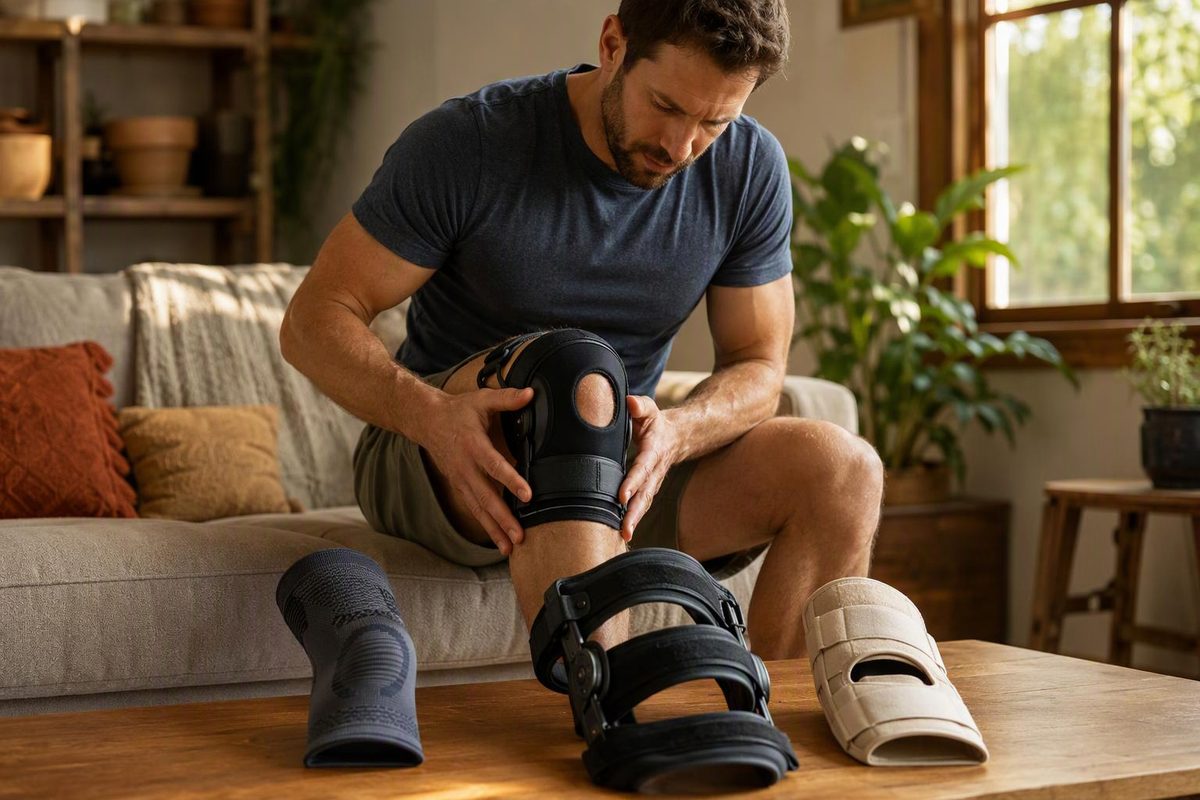
The best knee brace for meniscus damage depends on what the support needs to do. A compression sleeve may suit symptom management; a hinged brace may be appropriate for an unstable knee; after meniscus repair, follow the surgeon’s prescribed brace and movement limits. These are different jobs, not levels on a “good, better, best” scale.
For degenerative meniscus damage—changes that develop gradually—the EU–US meniscus rehabilitation consensus says bracing can be considered for symptoms or a better feeling of stability. That recommendation is based on expert opinion, not strong evidence that one brace is superior. The same consensus recommends nonsurgical care, including physical therapy, as the first approach for degenerative meniscus lesions. Read the consensus.
When assessment comes before shopping
If your knee is locked so you cannot bend or straighten it, you cannot bear weight, or you have severe pain after an injury, seek urgent assessment rather than trying a stronger brace. A hot, swollen knee or knee pain with fever also needs urgent care. A visibly deformed knee, tingling or loss of feeling in the knee, leg or toes after injury needs emergency assessment. NHS meniscus guidance lists these warning signs.
Repeated giving way or recurring swelling warrants evaluation, particularly if it persists during rehabilitation. The meniscus rehabilitation consensus recommends referral for persistent instability or recurrent swelling. Pain that interferes with normal activities or sleep also warrants a medical appointment, according to the NHS guidance above.
Meniscus symptoms overlap with other injuries, and a sports-related meniscus tear can occur alongside ligament damage. A brace cannot tell you which structure is injured. AAOS explains meniscus symptoms and associated injuries.
Compare the support types
| Support | When it may make sense | What to check before choosing |
|---|---|---|
| Compression sleeve | Light compression for symptoms when movement restriction has not been prescribed | Comfortable fit without bunching, slipping or painful pressure |
| Functional hinged brace | A clinician identifies instability or a need to control particular movements, including an associated ligament injury | The required support direction, hinge design and any prescribed movement stops |
| Postoperative range-of-motion brace | The surgical team prescribes protection after meniscus repair | Exact brace settings, weight-bearing restrictions and removal instructions |
| Unloader brace | Knee osteoarthritis is contributing to symptoms and a clinician recommends unloading the affected compartment | Which compartment needs unloading and professional fitting |
Compression sleeve: for compression, not a mechanical stop
A sleeve is elastic support, not a rigid brace. It lightly squeezes the knee but does not provide the movement control of a functional brace. The NHS includes a knee support or bandage among options for easing meniscus symptoms; AAOS likewise includes elastic compression in nonsurgical care. Neither makes a sleeve a substitute for assessing an unstable or locked knee. Cleveland Clinic explains support types.
If your knee has been assessed and the goal is simply compression, ask whether a sleeve is sufficient before paying for hinges and rigid frames.
Hinged brace: useful when there is a specific stability problem
Functional hinged braces are designed to support unstable, injured knees. Depending on the design, they can resist side-to-side stress and control other movements. Their common uses include ligament instability—not just a label saying “meniscus tear.” This orthopedic review describes their mechanisms and indications.
Do not choose one solely because the pain feels severe or the product promises maximum support. Ask: “What movement needs controlling, and does this brace control it?” Our hinged knee brace guide explains the distinction between support and prescribed movement limits.
After repair: the surgical plan takes priority
Meniscus repair and partial meniscectomy—trimming damaged tissue—do not have interchangeable recovery instructions. Protection after repair varies with the tear’s location and pattern, repair technique and any other procedures performed. A postoperative plan may use a brace locked straight for walking and separate limits for exercises. Do not copy another patient’s settings or replace a prescribed brace with a sleeve. A rehabilitation review explains these differences.
An unloader brace is another distinct option, generally used for knee arthritis. A meniscus diagnosis alone does not establish that you need one. Cleveland Clinic describes unloader braces.
Fit matters more than a “meniscus” label
Before buying, check:
- The exact model’s measurement instructions. Do not assume your usual clothing size applies. Use our knee brace measurement guide.
- Whether it stays positioned during permitted movement. A brace that repeatedly slides needs a fit review, not progressively tighter straps.
- Comfort at the edges and behind the knee. It should be snug and secure, without hurting or feeling as though it cuts off circulation.
- Whether you can apply it correctly. Ask a physiotherapist or orthotist to demonstrate fitting if hinges, straps or settings are confusing.
Poorly fitted support can cause skin irritation, pressure sores or nerve compression. Stop using an ordinary retail support if it causes pain, tingling or numbness, and seek advice; contact your surgical team promptly for problems with a prescribed postoperative brace. Cleveland Clinic’s fitting and risk guidance covers these concerns.
Use it as an aid, not clearance to push harder
Wear time depends on the reason for bracing. For ordinary symptom-relief supports, the NHS advises removal during sleep; postoperative instructions may differ and take priority. There is no universal all-day wear schedule for meniscus damage. NHS guidance.
Feeling more comfortable in a brace does not establish that the tear has healed or that running, pivoting or deep squatting is safe. Return to activity should consider swelling, movement, strength and function—not just how supported the knee feels. These are among the return-to-sport criteria in the meniscus rehabilitation consensus. If nonsurgical rehabilitation is appropriate for you, our gentle meniscus exercise guide offers a starting point to discuss with your physiotherapist.