
Why Does My Knee Buckle When Walking, and Is It Urgent?
Seek urgent assessment for inability to bear weight, deformity, physical locking, rapid major swelling after an injury, or significant new numbness or weakness.
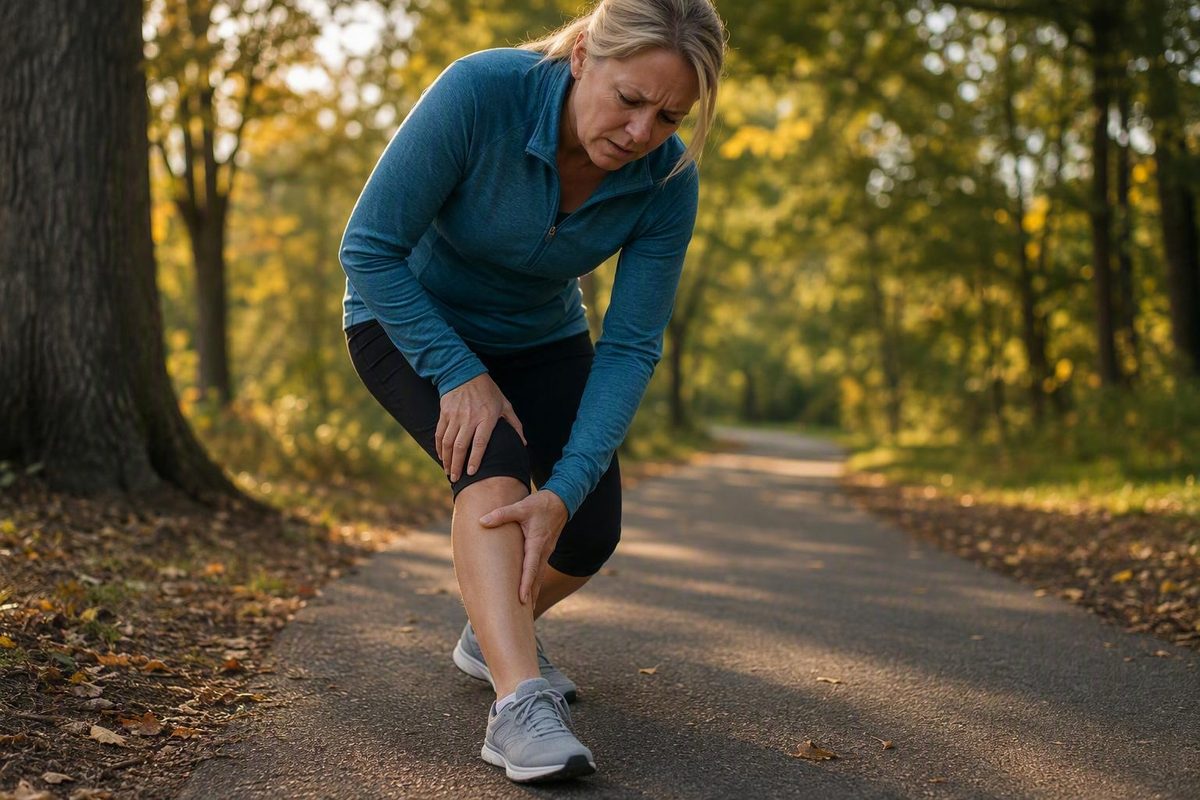
When your knee buckles during walking, it suddenly stops supporting your weight. It may feel as though the knee gives out, collapses, shifts, or cannot be trusted for the next step. This can happen with pain, immediately after sharp pain, or without pain.
Possible explanations include damage involving a ligament, meniscus, tendon, or kneecap; arthritis or swelling; weakness or disrupted muscle activation; loose material inside the joint; and nerve-related problems. Structural damage and impaired muscle control can also occur together.
The safest first step is not to guess the diagnosis. Protect yourself from another fall, look for warning signs, and decide whether you need urgent evaluation, a prompt clinical appointment, or cautious short-term monitoring.
What knee buckling means
Knee buckling is a sudden loss of support while weight is on the leg. People often describe it as the knee giving out or feeling unstable. It is a symptom of instability, not a diagnosis, and there is no single injury or condition responsible for every episode, according to the University of Maryland Medical System’s medically reviewed overview.
The sensation can take several forms:
- The knee briefly dips before you recover.
- The leg collapses enough to cause a stumble or fall.
- Sharp pain occurs first, followed by a loss of support.
- The kneecap feels as though it shifts sideways.
- The knee catches or becomes stuck before giving way.
- The leg feels weak even though the knee itself does not hurt.
Two broad mechanisms help explain these experiences.
Structural instability means that a physical stabilizer has been damaged or is moving abnormally. A torn or stretched ligament, displaced meniscal tissue, unstable kneecap, damaged tendon, or loose fragment may interfere with the knee’s ability to remain controlled under load.
Functional instability means that the knee acts or feels unstable even when no major tear has been confirmed. Pain or swelling may interfere with effective muscle activation, while weakness or poor coordination can leave the leg unable to control a step. The quadriceps at the front of the thigh have an important role in supporting the leg during walking.
These mechanisms can coexist. A ligament injury may create structural looseness while swelling makes the surrounding muscles less effective. Pain-related muscle inhibition is one possible explanation, but it should not be assumed to cause every—or most—episodes.
The distinction matters because different mechanisms require different responses. Strengthening may help a weak or poorly controlled leg, but it cannot remove material physically blocking the joint. A brace may provide temporary support, but it does not repair a torn ligament, meniscus, or tendon.
Arrange a clinical assessment if buckling happens repeatedly, causes a fall or near-fall, limits normal activity, or occurs with swelling, locking, catching, or persistent pain. Recurrent painless buckling also matters because the leg may still cause a fall.
Use the circumstances and accompanying symptoms as clues
The circumstances can help narrow the possibilities, but symptoms alone cannot identify the responsible tissue or condition. Start with one of three practical contexts: an episode immediately after an injury, recurrent buckling without a clear injury, or one mild isolated episode.
Buckling immediately after an injury
Think about the exact movement. Did the knee buckle after:
- Pivoting on a planted foot?
- Landing awkwardly?
- Falling?
- Sustaining a direct blow?
- Stopping or changing direction suddenly?
- Twisting while carrying weight?
Also note whether you heard or felt a pop, whether swelling developed quickly, whether you could bear weight, and whether the knee felt unstable immediately.
After a fall, twist, or awkward landing, rapid substantial swelling, inability to bear weight, physical locking, or loss of the ability to straighten the knee raises concern for a significant injury. These signs warrant prompt assessment, as outlined in this orthopedic warning-sign guidance.
A pop does not identify the injured structure by itself. Ligament, meniscus, kneecap, bone, and other injuries can overlap in how they feel. Swelling and instability similarly raise concern without establishing a diagnosis.
Recurrent buckling without a clear injury
When there was no memorable twist or fall, look for patterns:
- Does it happen on stairs, slopes, or uneven ground?
- Does it occur after sitting or when first standing?
- Does the knee feel stiff or swollen?
- Is pain gradually becoming more noticeable?
- Does the kneecap feel as though it shifts?
- Are one or both legs affected?
- Is there numbness, tingling, burning, or weakness?
- Has your balance or walking changed more generally?
Gradually developing pain, stiffness, swelling, and reduced mobility may fit arthritis, although those symptoms have other possible explanations. Pain or fluid in the joint may also make it harder to activate the quadriceps effectively. Weakness or impaired coordination can contribute even without a clear traumatic event.
If the kneecap seems to slide, partly move out of position, or abruptly return to its groove, patellar instability becomes a consideration. If buckling occurs with altered sensation, thigh or lower-leg weakness, foot weakness, or broader balance trouble, the evaluation may need to include neurological function rather than focusing only on the knee.
One mild, isolated episode
Brief monitoring may be reasonable after one mild episode when there was no significant injury, walking remains comfortable, the knee feels stable again, movement is normal, and there is no major swelling, locking, deformity, fever, numbness, or weakness.
These are general triage considerations, not a validated test proving that the knee is safe. Do not repeatedly provoke the knee to see whether it will buckle again. Resume ordinary activity cautiously, and seek assessment if instability returns, symptoms develop, or you experience a near-fall.
Catching, clicking, and true locking are different
A click is a sound or sensation during movement. Catching is a brief snag or interruption that then releases. These symptoms can occur for several reasons and do not automatically prove that a meniscus or another structure is torn.
True locking means the knee physically cannot fully straighten or bend, rather than movement merely feeling painful, stiff, or frightening. Displaced meniscal tissue or another obstruction can create a mechanical block. A genuinely locked knee requires urgent assessment.
What to record before an appointment
A short symptom log can make an evaluation more useful. Record:
- When the buckling began
- Whether there was an injury
- How often it happens
- Which activities or movements trigger it
- Where pain occurs, if present
- When swelling appears and how quickly
- Any pop, click, catch, or physical locking
- Whether the kneecap seems to shift
- Any falls or near-falls
- Numbness, tingling, burning, or weakness
- Previous knee injuries, dislocations, or operations
- Whether one or both legs are affected
These details guide the examination, but they cannot prove that a particular ligament, meniscus, nerve, or other structure is responsible.
Structural causes: ligaments, meniscus, kneecap, tendons, and loose fragments
Structural causes involve tissues that guide, stabilize, or move the knee. The presence of buckling does not reveal the severity of an injury, and not every structural problem requires surgery.
Ligament injury
The knee’s ligaments restrain unwanted movement. Injury to the anterior cruciate ligament, posterior cruciate ligament, medial collateral ligament, lateral collateral ligament, or a combination of these structures can reduce passive stability.
A pivot-related injury, pop, rapid swelling, or immediate instability increases concern for ligament damage. Different ligaments control different directions of movement, but symptoms experienced at home cannot reliably identify which ligament is injured.
Management depends on the ligament involved, the extent of the injury, associated damage, activity demands, and the person’s goals. Some ligament injuries are managed without an operation, while substantial or combined injuries may need specialist review. Buckling by itself is not an automatic indication for surgery.
Meniscus injury
The menisci are cartilage structures between the thigh and shin bones. A tear may follow a forceful twist or develop in tissue affected by age-related wear.
Possible symptoms include:
- Pain while bearing weight
- Tenderness around the joint line
- Swelling
- Catching
- Reduced ability to straighten the knee
- True locking
- Giving way during movement
A larger displaced tear may physically obstruct movement, while another tear may cause pain without locking. Meniscal symptoms also overlap with arthritis and ligament injuries, so an examination—and sometimes imaging—is needed to distinguish them. Weight-bearing pain, swelling, locking, buckling, and inability to fully straighten the knee are described among the patterns associated with larger displaced tears in this physiotherapy clinic’s review.
Not every meniscal tear requires surgery. Treatment depends on the tear’s characteristics, whether the knee is mechanically blocked, associated injuries, symptom persistence, and functional needs.
Kneecap instability
The kneecap normally glides within a groove at the front of the knee. Patellar instability occurs when it moves too far from that path. A subluxation is a partial displacement; a dislocation is a complete displacement.
The episode may feel different from a simple collapse. You might sense that the kneecap moved sideways, slipped, or snapped back into place. Pain, swelling, apprehension during movement, and recurrent instability may follow.
Evaluation may consider the event that triggered the displacement, whether instability has happened before, resulting damage, alignment, and muscle control. A first traumatic event and repeated episodes do not necessarily require the same management.
Quadriceps or patellar tendon injury
The quadriceps tendon above the kneecap and patellar tendon below it are part of the mechanism used to straighten the leg. A substantial tear may impair active extension and make the leg collapse under weight.
This is less routine than ordinary weakness but is important after an injury. Seek prompt assessment if you suddenly lose the ability to straighten the knee actively or support the leg. Tendon tears are among the recognized structural causes of buckling and impaired extension.
Loose bone or cartilage fragments
A loose fragment of bone or cartilage inside the joint may move into a position that interrupts motion. This can cause catching, a sudden block, or buckling, and symptoms may come and go as the material changes position.
The sensation alone cannot confirm a loose fragment. If the knee repeatedly catches or physically locks, obtain an assessment rather than trying to exercise through the obstruction.
Buckling without a clear injury: arthritis, muscle control, and nerve-related causes
The absence of a memorable twist does not mean nothing is wrong. Some causes develop gradually, while others affect how muscles and nerves control the leg.
Arthritis and pain-related inhibition
Arthritis may be accompanied by pain, stiffness, swelling, reduced movement, and giving way during standing or walking. It is one possibility, not a diagnosis that should be assumed from age or buckling alone.
Pain and swelling may interfere with effective quadriceps activation. If the muscle does not provide enough support at the required moment, the knee may dip during a step. This is a plausible functional mechanism, but it is not the default explanation for every episode.
Structural and functional effects can coexist. Joint changes may affect movement, while pain leads to reduced activity and weakness. Conversely, arthritic changes visible on an X-ray may not fully explain the instability a person is experiencing.
Weakness and impaired movement control
The quadriceps help control knee position as weight transfers onto the leg. The hamstrings and muscles around the hip also contribute to balance, alignment, and control. Weakness, fatigue, or poor coordination may therefore contribute to functional instability.
That does not mean everyone whose knee buckles simply needs stronger muscles. Weakness may be a contributor, a result of avoiding activity, or a sign of an underlying joint or nerve problem. Assessment may be necessary before the knee is loaded with a strengthening program.
Femoral nerve dysfunction and other neurological causes
The femoral nerve supplies muscles involved in straightening the knee and carries sensation from parts of the thigh and lower leg. Dysfunction affecting this nerve may cause weakness along with thigh or lower-leg pain, tingling, burning, or numbness, as described in this medically reviewed overview of knee buckling.
Other neurological or spinal problems may also alter strength, sensation, or coordination. Relevant clues include:
- Progressive thigh or leg weakness
- New foot weakness
- Numbness or altered sensation
- Burning or electric pain
- Symptoms extending beyond the knee
- Buckling in both legs
- Broader changes in balance or walking
Buckling alone cannot identify femoral neuropathy, multiple sclerosis, spinal nerve compression, or any other neurological diagnosis. New, significant, or progressive weakness or sensory loss needs prompt medical evaluation.
Painless buckling still matters
Pain is useful information, but it is not the only measure of seriousness. Structural looseness, abnormal kneecap movement, impaired muscle activation, or nerve-related weakness may cause buckling without marked knee pain.
One painless episode without an injury or warning signs may not recur. Repeated painless buckling is different because every episode creates another opportunity to fall. Arrange an assessment if it affects normal walking, becomes progressively worse, or occurs with neurological symptoms.
When a buckling knee needs urgent or prompt medical care
Use the following levels as general triage guidance, not as a diagnosis or a guarantee that continued activity is safe.
Important: Knee Pain Zone provides general education, not individualized diagnosis or treatment. This article cannot determine why your knee is buckling or replace an examination by a qualified healthcare professional. See the site’s medical-information notice for its educational-use policy.
Urgent evaluation
Seek urgent medical assessment if:
- You cannot bear weight on the affected leg.
- The knee or leg has a visible deformity.
- The knee is physically locked and cannot fully bend or straighten.
- Major swelling develops rapidly after an injury.
- A red, hot, swollen knee occurs with fever or feeling systemically unwell.
- There is new significant numbness or weakness.
- The lower leg or foot develops a concerning color change.
- An injury has left you unable to straighten the knee actively.
These warning signs—including locking, inability to bear weight, deformity, rapid swelling, fever with warmth or redness, and neurological or circulation changes—are identified in orthopedic urgent-care guidance.
After a pop, twist, fall, or awkward landing, rapid swelling, inability to bear weight, locking, or loss of extension increases concern for a substantial injury. Do not try to walk it off or force a physically locked knee through its restricted range.
Prompt clinical assessment
Arrange an appointment soon if:
- The knee has buckled more than once.
- You fell or nearly fell.
- Instability is worsening.
- Pain or swelling persists.
- Popping or catching is painful.
- Motion remains reduced.
- Ordinary walking or stairs have become difficult.
- The kneecap repeatedly feels as though it shifts.
- Weakness, tingling, burning, or numbness accompanies the episodes.
- You no longer trust the knee during daily activity.
Recurrence lowers the threshold for assessment even when pain is mild or absent. A clinician can investigate whether the problem is primarily mechanical, muscular, neurological, or a combination.
Brief monitoring may be reasonable
Brief monitoring may be reasonable after one mild episode if there was no significant trauma, walking remains comfortable, the knee feels stable, movement is normal, and no warning signs are present.
This is not a self-test that can rule out injury. Avoid the triggering movement instead of repeatedly testing the knee. Seek care if it gives way again, pain or swelling develops, walking becomes difficult, or you notice weakness or altered sensation.
Reduce your chance of falling before the cause is known
The immediate priority is to avoid turning an uncertain knee problem into a fall.
Stop the activity that triggered the episode. Do not repeatedly pivot, squat, jump, or use stairs simply to check whether the knee is “really” unstable.
Until the knee feels reliable or has been assessed:
- Avoid pivoting on the affected leg.
- Choose level, predictable ground.
- Avoid unsupported stairs, ladders, and uneven surfaces.
- Use available handrails.
- Keep pathways clear of clutter and loose rugs.
- Avoid activities in which another buckle could cause a serious fall.
- Limit weight bearing if it is painful or the leg remains unreliable.
A brace or sleeve may provide temporary support or sensory feedback for some people. It is not proof that walking is safe, and it cannot repair a torn ligament, meniscus, tendon, or cartilage surface. The type, fit, and purpose of the support need to match the underlying problem.
A mobility aid may be appropriate when the fall risk exceeds what a brace can address. Because suitability depends on strength, balance, the suspected injury, and the environment, seek professional guidance rather than assuming a particular aid is appropriate.
The fall concern is supported by observational evidence, although the numbers require context. A cohort study followed 1,842 adults aged 55–84 who had knee osteoarthritis or were at high risk for it. Baseline buckling was associated with 1.6- to 2.5-fold greater adjusted odds of recurrent falls, fear of falling, and poor balance confidence two years later in the peer-reviewed analysis.
Those figures describe odds, not absolute-risk increases. The study found an association and did not prove that buckling directly caused later falls. Much of the information was participant-reported, and the results should not be applied directly to younger adults or people without osteoarthritis risk factors. The practical point remains: if a knee is unreliable, reduce fall exposure before the final diagnosis is known.
How clinicians evaluate a knee that gives way
Evaluation normally starts with the history and physical examination, not an automatic MRI. The goal is to understand the type of instability, identify the structures or systems that may be involved, and determine whether imaging would change management.
History
Expect questions about:
- The movement or injury preceding the first episode
- Whether onset was sudden or gradual
- How often the knee gives way
- Activities that trigger it
- The location and character of pain
- The timing and extent of swelling
- Pops, catches, clicks, or locking
- Falls and near-falls
- Difficulty walking, using stairs, or rising from a chair
- Previous injuries, dislocations, operations, or joint disease
- Numbness, tingling, burning, or weakness
- Balance changes or symptoms elsewhere in the leg
Whether the knee collapsed, shifted at the kneecap, or stopped supporting weight after sharp pain can influence the examination.
Physical assessment
Depending on the presentation, a clinician may assess:
- Walking pattern and balance
- Weight-bearing tolerance
- Swelling, bruising, warmth, and alignment
- Active and passive range of motion
- Ability to straighten the knee
- Quadriceps, hamstring, hip, and lower-leg strength
- Ligament stability
- Findings associated with meniscal irritation
- Kneecap movement
- Tender areas
- Sensation, reflexes, and other neurological functions
- Circulation when symptoms raise concern
A professional examination combines the history with several relevant findings rather than relying on one symptom or movement.
Imaging is selective
Imaging is chosen according to the suspected cause and examination findings.
X-rays primarily assess bones, alignment, fractures, and arthritic changes. They may be useful after trauma or when gradual joint changes are suspected. A normal X-ray does not exclude every ligament, tendon, meniscus, cartilage, nerve, or muscle-control problem.
MRI may be considered when a ligament, meniscus, tendon, cartilage injury, or another soft-tissue problem is suspected. It is not automatically required after every episode.
Ultrasound, CT, or stress X-rays may be used in selected situations, depending on the clinical question. Evaluations of recurrent buckling may combine the medical history, physical examination, and selectively chosen imaging rather than relying on one test, as summarized in this knee-clinic diagnostic overview.
Imaging must also be interpreted alongside symptoms and function.
Treatment depends on why the knee is buckling
There is no universal treatment. A weak or pain-inhibited knee is managed differently from a physically locked meniscus, substantial ligament injury, unstable kneecap, tendon tear, arthritis, or nerve problem.
Activity modification and protection
Early management may involve temporarily reducing movements that trigger instability. The purpose is not indefinite rest; it is to prevent another buckle while the problem is assessed and an appropriate loading plan is established.
The required level of protection varies. A mild, stable presentation may call for temporary activity modification. Inability to bear weight after trauma requires prompt evaluation and greater protection.
Rehabilitation
After assessment, rehabilitation may include:
- Progressive quadriceps strengthening
- Hip and hamstring strengthening
- Balance or proprioceptive work
- Coordination and movement-control training
- Flexibility and range-of-motion work
- Gait retraining
- Gradual return to stairs or uneven surfaces
- Work on confidence after a fall or near-fall
The program should match the suspected mechanism. Someone with generalized weakness needs a different progression from someone recovering from kneecap dislocation or a ligament injury. Rehabilitation may strengthen supporting muscles and improve movement control, but it cannot correct every mechanical obstruction or major structural injury.
Acute trauma, significant swelling, true locking, inability to bear weight, loss of extension, or neurological weakness should be assessed before unsupervised strengthening.
Stop or modify exercise if it causes:
- Sharp pain
- New or increasing swelling
- Catching
- Locking
- A fresh buckling episode
- Worsening instability
- New numbness or weakness
These stop signals and the need to tailor exercise to tolerance are reflected in clinical patient guidance on recurrent knee instability. If you cannot distinguish ordinary muscle effort from joint pain or mechanical obstruction, seek professional advice rather than pushing through.
Braces, sleeves, and mobility aids
A sleeve may provide compression or sensory feedback. A more structured brace may limit a particular movement or add support.
Selection and fit should match the cause. A brace that helps one problem may not control another, and external support does not repair damaged tissue. Mobility aids may reduce loading or provide broader support, but their use should be matched to the person’s strength, balance, symptoms, and environment.
Medication and injections
Medication may sometimes be used for pain or inflammation related to the underlying condition. Injections may be discussed for selected joint problems. Suitability depends on the diagnosis, other medical conditions, current medication, allergies, and individual risks.
Neither medication nor an injection restores every form of stability. Reducing pain may help someone participate in appropriate rehabilitation, but it does not remove a mechanical blockage or reconnect a torn tendon. Specific products and doses require individualized advice.
Surgery
Surgery may be considered in selected cases involving:
- Substantial ligament injury
- A major tendon tear
- Persistent mechanical locking or obstruction
- Recurrent kneecap instability
- Disabling symptoms despite appropriate nonsurgical care
- Advanced joint damage
- Combined injuries requiring structural repair
Treatment commonly begins with nonsurgical care, but some major ligament, tendon, or mechanically obstructive injuries need specialist assessment and possible surgery. The University of Maryland Medical System’s overview emphasizes that management must address the underlying cause rather than the symptom alone.
A knee buckling once does not by itself justify an operation. Decisions depend on examination findings, imaging when indicated, associated damage, functional demands, and personal goals. Recovery time likewise cannot be predicted from buckling alone.
Frequently asked questions
Can a knee buckle without pain?
Yes. Buckling can occur with pain, immediately after pain, or without noticeable pain. Structural looseness, kneecap movement, weakness, impaired muscle activation, and nerve dysfunction do not all produce the same pain pattern.
Absence of pain does not make recurrent episodes harmless. Arrange an assessment if painless buckling repeats, interferes with walking, causes a fall or near-fall, or occurs with numbness or weakness.
Should I keep walking after my knee gives way?
Stop the triggering activity and check whether the leg remains painful or unstable. Do not continue if the knee cannot support weight, swelling is developing, or another buckle seems likely.
Seek urgent assessment for inability to bear weight, deformity, physical locking, rapid major swelling after an injury, or significant new numbness or weakness. After a mild isolated episode, cautious movement may be reasonable only if the knee feels stable and no warning signs are present; that does not prove that the knee is uninjured.
Will a knee brace stop my knee from buckling?
It may help in some circumstances, but it will not reliably prevent buckling from every cause. A brace or sleeve may offer temporary support, limit certain movements, or improve awareness of knee position.
A brace does not repair torn tissue, remove a loose fragment, resolve a locked knee, or treat a nerve problem. Do not treat the presence of a brace as proof that stairs, uneven ground, or prolonged walking are safe.
What tests might be used for recurrent knee buckling?
Testing generally begins with a history and physical examination. A clinician may assess gait, weight-bearing tolerance, movement, swelling, muscle strength, ligament stability, meniscal signs, kneecap movement, sensation, reflexes, and other neurological functions.
X-rays may assess bone, alignment, fracture, and arthritis. MRI may be considered for suspected ligament, meniscus, cartilage, tendon, or other soft-tissue injury. Ultrasound, CT, or stress X-rays may be useful in selected cases. Not everyone needs imaging, and a normal X-ray does not rule out every cause.
Can numbness or tingling with knee buckling indicate a nerve problem?
Yes. Buckling accompanied by numbness, tingling, burning, or weakness can indicate that a nerve or broader neurological problem needs consideration. Femoral nerve dysfunction may produce weakness along with symptoms in parts of the thigh or lower leg, while other symptom distributions may direct the evaluation elsewhere.
These symptoms do not establish a specific diagnosis. Obtain prompt assessment for new, significant, or progressive weakness or sensory loss, particularly if walking is deteriorating, both legs are affected, or new foot weakness is present.
Protect yourself against another fall first. Seek urgent evaluation for inability to bear weight, deformity, true locking, rapid major swelling after injury, fever with a hot red swollen knee, or new neurological or circulation changes. Arrange a prompt assessment for recurrent episodes, worsening instability, falls, or near-falls. The objective is not to name the condition from one symptom, but to identify the mechanism and match treatment to it.