
Exercises for Knee Flexion: Improve Bending and Build Strength
Learn heel slides, seated knee bends and hamstring curls, with a gentle starting dose, progression steps and checks for pain or swelling.
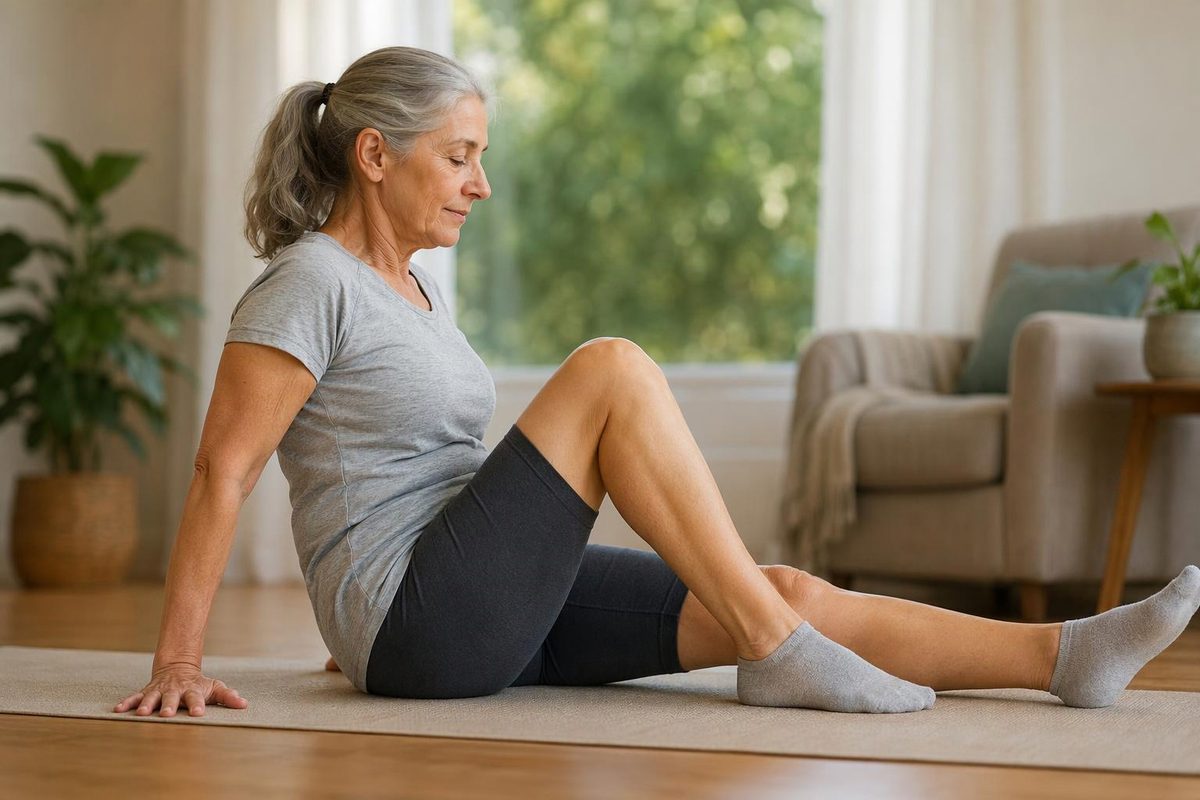
Knee flexion means bending your knee. The right exercise depends on your goal: heel slides and seated knee bends practise bending range; hamstring curls strengthen the muscles that bend the knee. A curl is not a substitute for gentle mobility work when your main problem is stiffness.
Start with one bending exercise rather than doing every variation. Add strengthening when you can move comfortably and stand safely.
When to get advice before exercising
Seek urgent medical advice if your knee is very painful, cannot move or bear weight, is badly swollen or misshapen, locks or gives way, or becomes hot or red with fever or shivering. Do not try to stretch through a locked knee. Arrange an assessment if pain is not improving within a few weeks. These are among the NHS warning signs for knee pain.
If you have a diagnosed knee condition or recent surgery, follow your clinician’s exercise plan rather than this general guide. NHS Inform makes the same distinction; prescribed bending limits take priority.
1. Heel slide: practise bending with the leg supported
Choose this if: you want a gentle way to explore your available bending range while lying down.
- Lie on your back on a bed or comfortable floor surface, with both legs straight.
- Slowly slide the heel of the knee you are exercising toward your bottom. Keep the heel supported on the surface.
- Stop at a comfortable bend, without forcing the heel closer.
- Hold for about two seconds, then slide the foot away to straighten the leg.
Bending and straightening counts as one repetition. These directions follow NHS Inform’s lying knee bend.
Form check: move slowly rather than dragging the heel in with a sudden pull. The aim is a controlled bend, not touching your heel to your bottom.
Progression: let the heel travel a little farther as comfort improves. Do not have someone push the knee into a deeper bend.
2. Seated knee bend: an alternative to lying down
Choose this if: a chair is easier to use than a bed or floor.
- Sit on a stable chair with your foot resting on the floor.
- Slowly slide that foot backward underneath the chair, bending the knee as far as is comfortable.
- Hold for up to five seconds.
- Slide the foot forward again and gently straighten the knee.
This bending-and-straightening movement appears in Leicester’s Hospitals’ physiotherapy leaflet for knee injury or pain.
Form check: keep the movement smooth. Do not jerk your body forward to force the knee farther.
Progression: gradually move the foot a little farther back. Treat this as an alternative to heel slides initially, not extra repetitions you must complete.
3. Standing hamstring curl: strengthen knee bending
Choose this if: bending is comfortable and you can stand securely with support.
Before strengthening, the AAOS knee conditioning programme recommends warming up with five to ten minutes of low-impact activity, such as comfortable walking.
- Hold a sturdy chair back or wall for balance.
- Keep your knees close together and bend one knee, raising your heel behind you.
- Lift only as far as you can without pain. Keep your foot flexed, with the toes drawn toward the shin.
- Hold for up to five seconds, then lower slowly.
You should feel the effort in the back of your thigh. The AAOS programme uses this exercise to train the hamstrings and advises clinician supervision when using its programme for rehabilitation.
Form check: keep your thigh near its starting position rather than swinging the whole leg backward.
Progression: begin without weights. Once repetitions are comfortable and controlled, resistance can be increased gradually; after injury or surgery, ask your physiotherapist when an ankle weight or leg-curl machine is appropriate. For the equipment distinction, see leg extension versus leg curl.
How much to do—and how to judge progress
For a gentle mobility trial, start with two or three repetitions of either heel slides or seated bends. Practise small amounts across the day. If this remains comfortable, add one or two repetitions every few days, following NHS Inform’s gradual starting approach.
For curls, ask your physiotherapist to set repetitions and frequency if you are using them for rehabilitation. Build comfortable, controlled repetitions before adding weight.
Keep mobility gentle and curls pain-free. Existing knee pain should be no worse the following morning. Reduce the bend or repetitions if the movement is uncomfortable; stop an exercise that makes symptoms worse or causes new pain, as NHS Inform advises. If exercise brings on increased swelling and pain, pause it and reduce activity until symptoms settle, following Leicester’s advice.
Judge progress by whether you can bend a little farther with the same or less discomfort, not by how hard you can push. You can note your heel’s position during the same exercise each time, but after surgery use your therapist’s measurements and targets rather than chasing a universal bending angle.