
Pain Behind the Knee When Bending: Clues and Next Steps
Does bending hurt behind your knee? Learn which movement clues matter, how to adjust painful activities, and when to seek medical care.
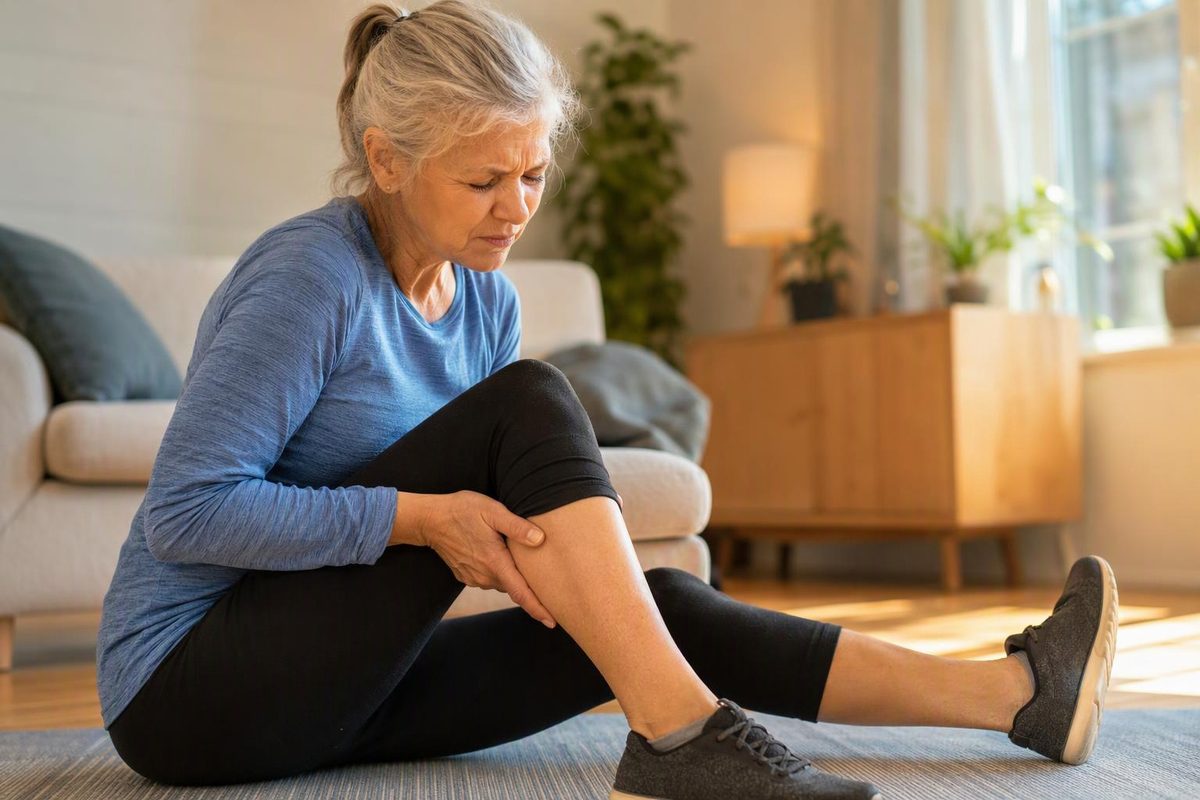
Pain behind the knee when bending can involve muscles or tendons, fluid swelling such as a Baker’s cyst, or sometimes a problem inside the joint. Bending pain alone cannot identify the cause. When describing it, note whether pain appears near the deepest bend, when you actively pull your heel back, or with a loaded bend and twist. Clinicians assess movement, local tenderness, swelling and stability together—not one painful motion in isolation. Clinical review of posterior knee pain
When not to test the bend
Seek urgent medical assessment if the knee is very painful, cannot move or bear weight, is badly swollen or misshapen, locks, or gives way. A hot or red knee with fever or feeling shivery also needs urgent assessment because infection is possible. NHS knee-pain guidance
Sudden or worsening calf or leg pain and swelling, especially with warmth or skin colour changes, needs urgent assessment too. A ruptured cyst and a blood clot can look similar. Leg pain or swelling with breathlessness or chest pain is an emergency: call your local emergency number. NHS Baker’s cyst guidance
Which kind of bending hurts?
Use what you have already noticed during everyday movement. You do not need to repeat painful squats, force the heel toward your buttock, or perform twisting tests.
Bending feels restricted, with fullness behind the knee
A Baker’s cyst is a fluid-filled swelling behind the knee. It can cause pain, stiffness and difficulty bending; a large cyst can restrict knee flexion—the medical term for bending. Fullness or a soft lump makes this possibility worth checking, but does not prove it. NHS symptoms and clinical review
In adults, a cyst often accompanies another knee problem, such as arthritis or a meniscus tear. It is therefore not always a choice between “a cyst” and “a joint problem.” AAOS Baker’s cyst guidance
A new unexplained lump should be examined. For more on that particular symptom, see swelling behind the knee. NHS advice about lumps
When actively pulling the heel back or bending against resistance
The hamstrings at the back of the thigh bend the knee. The gastrocnemius, one of the main calf muscles, also crosses the knee. Injury or irritation in these tissues can cause posterior pain; gastrocnemius pain may occur with resisted bending and calf raises. Local tenderness and a recent running, sprinting or exercise-related onset help a clinician assess this possibility. Clinical review
Tell the clinician if an ordinary, unloaded bend feels different from pulling against resistance. That is useful history, not a home diagnostic test—and not a reason to start forceful hamstring stretching.
During a loaded bend or twist, with catching
A meniscus tear is another possibility, particularly if symptoms began during a pivot or awkward twist and include swelling, catching or reduced movement. The menisci are cartilage pads between the thighbone and shinbone. AAOS meniscus guidance Tears involving their back portions can produce posterior pain, although pain behind the knee is not the typical presentation. Clinical review
Being able to walk does not rule out a tear. Equally, pain during a deep squat does not establish one. For a fuller explanation of the associated symptoms, see what a torn meniscus can feel like. AAOS meniscus guidance
What to change while it settles
If symptoms are mild and none of the warning signs above applies:
- Reduce the movement that provokes pain. Temporarily use a shallower bend rather than repeatedly checking the painful endpoint; pause deep squats, kneeling or resisted curls if those trigger symptoms.
- Keep gentle movement. Bend and straighten within a comfortable range rather than keeping the knee completely still. Reduce activity initially and build back as symptoms allow; avoid sports and heavy lifting until discomfort is lower and movement improves.
- Use cold for symptom relief if helpful. Wrap the pack in a towel, use it for no longer than 20 minutes, and leave a few hours between applications. Stop if skin redness, discolouration or blistering develops. Avoid heat or ice if you have impaired circulation or sensation.
These are general measures for a new knee problem, not rehabilitation for a diagnosed condition or recent surgery. Follow your treating team’s advice in those situations. NHS inform self-care guidance
Arrange an assessment if pain worsens or is not improving within a few weeks. Bring a precise description: where behind the knee it hurts, which bending task triggers it, whether it also hurts to straighten, and whether there is swelling or catching. NHS follow-up advice
An examination can guide whether imaging is useful—for example, ultrasound to check whether a lump is solid or fluid-filled, or MRI to look for a meniscus tear or another underlying joint problem. AAOS imaging guidance