
Knee Pain From Squats: Causes and What to Change
Knee pain during or after squats? Check the pain pattern, learn how to adjust depth and load, and recognize symptoms that need medical assessment.
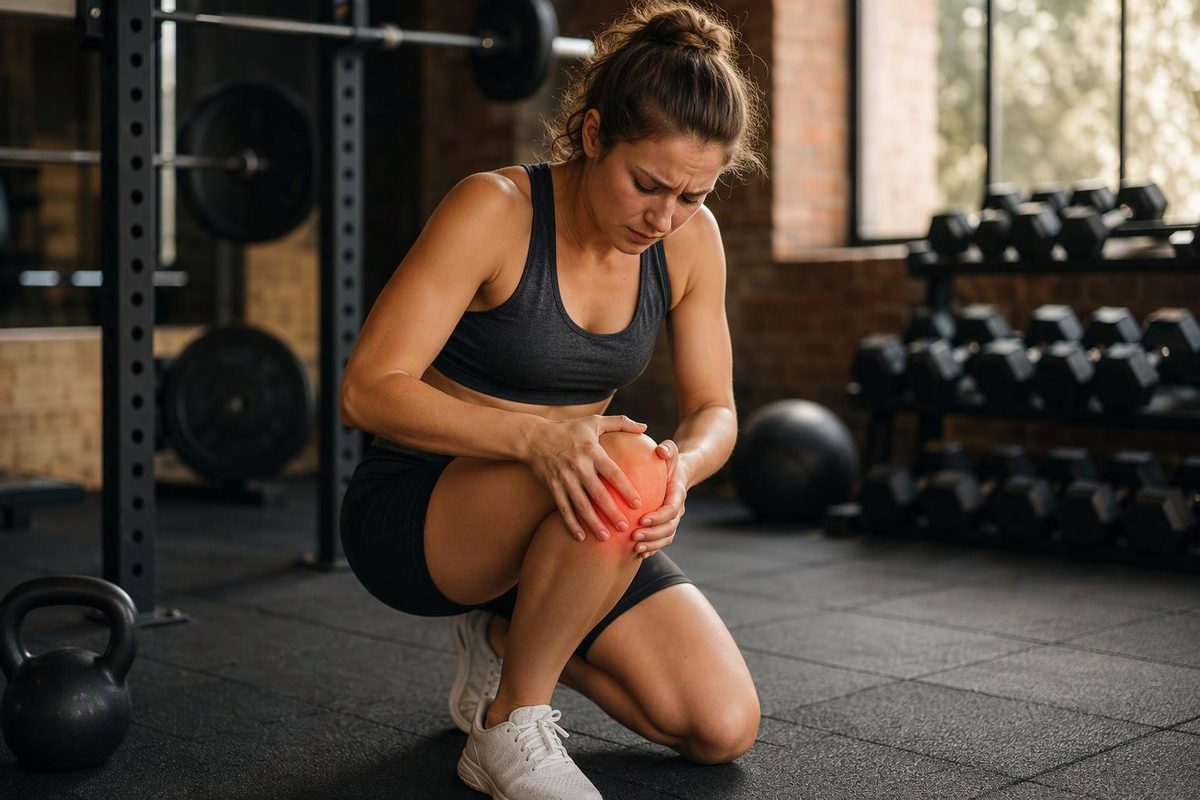
If your knee hurts during or after squats, stop the painful set rather than repeatedly testing it. The next step depends on whether the pain developed gradually after more training or began suddenly with a twist, pop or swelling.
Squatting can provoke pain around the kneecap or in the tendon below it, but pain during this movement does not identify the cause. A recent increase in training frequency, duration or intensity is one possible contributor to kneecap-related pain—not proof that your squat technique is wrong. AAOS explains these activity-related triggers.
When to get help before trying more squats
Seek urgent medical advice if your knee is very painful, you cannot move it or bear weight, it is badly swollen or has changed shape, or it locks, gives way or clicks painfully. A hot, red knee with fever or feeling shivery also needs urgent assessment. Painless clicking alone is usually normal. These are the NHS knee-pain warning signs.
Arrange an assessment if pain is worsening, movement is becoming harder, or symptoms are not improving within a few weeks. If the pain started with a specific injury, do not assume that changing squat form is enough.
What the pain pattern may suggest
These clues help you describe the problem to a clinician; they are not a way to diagnose yourself.
| Pattern | Possible explanation |
|---|---|
| A gradual ache around or behind the kneecap, also noticeable on stairs or after sitting with the knee bent | Patellofemoral pain—pain associated with the joint between the kneecap and thighbone. Squatting is a common trigger. |
| More localized pain just below the kneecap, particularly with jumping, stairs or increased training | Patellar tendinopathy—pain involving the tendon connecting the kneecap to the shinbone. |
| Pain after a twist or pivot, followed by stiffness, swelling, catching or loss of movement | A meniscus injury or another knee injury may need assessment. The menisci are cartilage pads between the thighbone and shinbone. |
These patterns are described by NHS Lanarkshire for patellofemoral pain, Dorset’s NHS musculoskeletal service for patellar tendinopathy and AAOS for meniscus tears. Being able to walk does not rule out a meniscus tear.
Before your appointment, note where the pain is, whether it starts while lowering or rising, and whether it appears only afterward. Also record recent changes in weight lifted, sets, repetitions, squat depth and other leg training.
How to modify squats when symptoms are mild
For mild, gradual symptoms without the warning signs above, try reducing the demand rather than stopping every form of activity. This approach is consistent with NHS advice for patellofemoral pain.
- Reduce the load and volume. Remove added weight and try fewer repetitions or sets. Do not replace them with another painful leg exercise.
- Use a shallower range. If deeper bending triggers pain, try a small, comfortable squat instead. In a laboratory study of 20 healthy adults, greater knee bending tended to produce higher estimated kneecap-joint loading. That supports adjusting depth, but does not establish that deep squats cause injury. See the loading study.
- Keep the movement controlled. For a body-weight trial, use a comfortable stance, keep your whole foot planted and let your knees move in line with your toes. Lower only as far as feels comfortable. These cues appear in Dorset’s squat rehabilitation guidance; they are not a universal fix for knee pain.
- Check the response afterward. Stop if the trial causes new pain or worsens symptoms. Your knee pain should be no worse the next morning. If it is, reduce the exercise further or leave squats out for now. NHS inform recommends this next-morning check.
Keep other comfortable activity, such as walking or swimming, if it does not aggravate symptoms. If you have a diagnosed condition or recent knee surgery, follow your treating professional’s plan instead.
Rebuilding strength without repeating the flare
For people assessed as having patellofemoral pain, a 2024 best-practice guide recommends education and knee-targeted exercise, with hip-targeted exercise added as appropriate. That recommendation does not mean everyone with squat pain needs the same routine.
A physiotherapist can help select a tolerable starting exercise and work toward the squat depth and load you need. Our knee-strengthening starter plan explains general exercise options and progression checks. Build back gradually; do not use your old working weight as a test of recovery.