
Can You Overuse a TENS Machine? Safe Use for Knee Pain
TENS has no universal daily limit. Follow your device manual, use a strong but comfortable setting, check your skin and know when to stop.
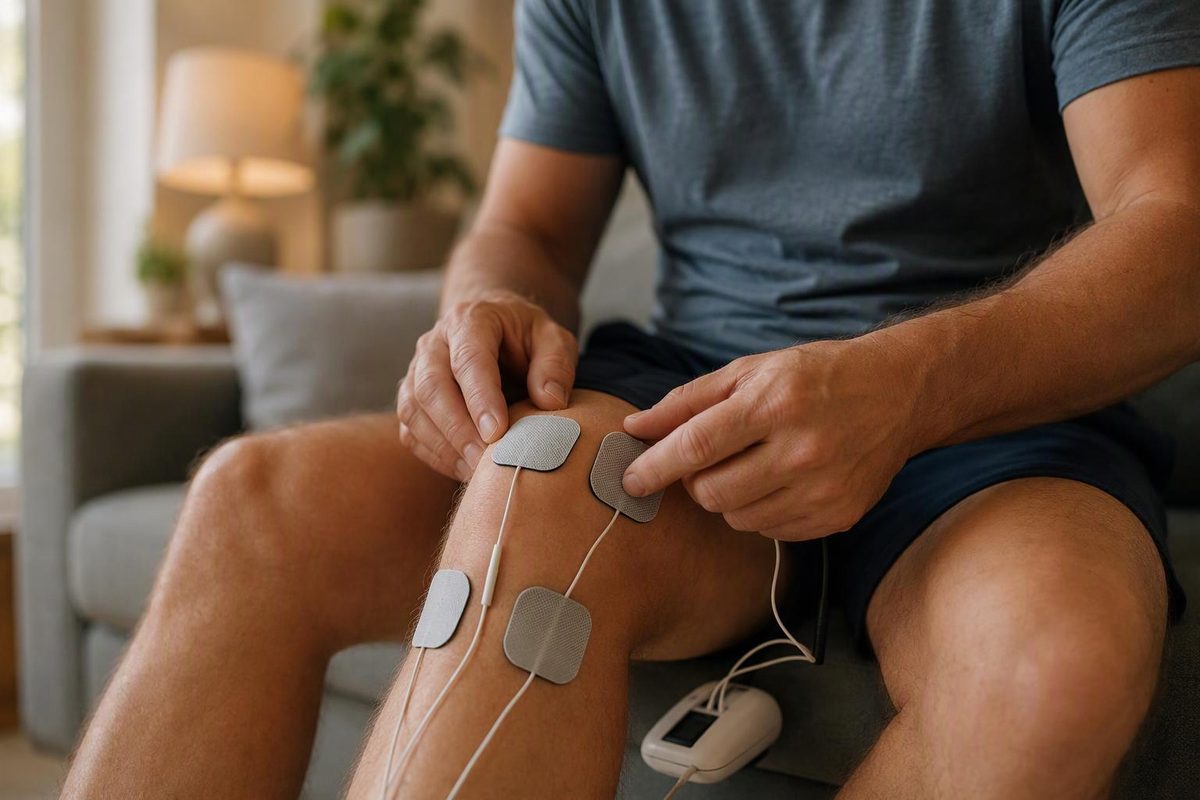
Yes—in practical terms, you can use a TENS machine for too long, at an uncomfortable intensity or without giving your skin a break. Possible consequences include skin irritation, discomfort and burns beneath the pads. If the stimulation causes repeated muscle contractions, extended use may also leave the muscle tired or sore.
There is no single session limit that applies to every TENS machine. The Royal National Orthopaedic Hospital advises a maximum of 60 minutes at a time, usually up to three times a day. An Omron home unit, by contrast, limits treatment of one region to 30 minutes per session, up to three times daily. Follow the instructions for your exact device rather than adopting a time limit from another model (Royal National Orthopaedic Hospital; Omron device manual).
Signs that you should stop
Turn the machine off and remove the pads if you notice:
- burning, stinging or pain instead of a comfortable tingling
- redness that persists, itching, a rash or blistering under a pad
- worsening pain during or after treatment
- headache, dizziness or nausea
- uncomfortable muscle twitching, fatigue or soreness
The NHS advises stopping if the skin becomes itchy, irritated or red. University of Iowa Health Care also advises contacting your healthcare team for skin irritation, headache, dizziness or nausea. Excessive current, poor electrode placement and long use without breaks can damage the skin (NHS; University of Iowa Health Care; Royal National Orthopaedic Hospital).
A temporary mark from an adhesive pad is not necessarily a burn. Even so, do not place the electrode back over irritated skin. Seek medical advice for persistent redness, blistering or broken skin.
A safer way to use TENS for knee pain
- Read the manual for your exact model. Check its session limit, approved pad arrangement and conditions in which it should not be used.
- Start with clean, dry, intact skin that has normal sensation. Do not place pads over a wound, rash, infection or inflamed or numb skin.
- Use the knee-placement diagram supplied with the device. Pad arrangements differ. For example, the cited Omron model permits both pads above the knee or one above and one below it. Keep pads separated and make sure they adhere fully.
- Increase the intensity gradually. Aim for a strong but comfortable sensation, not burning or pain. Maximum intensity is not the goal.
- Obey the timer or stated maximum. A different device’s 60-minute guidance does not override your manual’s 15- or 30-minute program.
- Turn the unit off before moving or removing pads. Inspect your skin afterward and avoid placing the electrodes on exactly the same spot every day.
- Treat TENS as symptom relief, not a test of healing. Less pain while the unit is running does not prove that your knee is ready for more walking, running or exercise.
A systematic review of 381 randomized trials involving adults with many different painful conditions found lower pain during or immediately after strong, non-painful TENS than with placebo. This was not a knee-specific result, and adverse events were poorly reported, although those reported were generally mild (BMJ Open systematic review).
Can you use TENS every day?
Some people use TENS daily and others reserve it for pain flares. Daily use may be reasonable if your device permits it, your skin remains healthy and you do not have a condition that makes electrical stimulation unsuitable. It does not remove the need to follow each session limit.
If the effect seems to fade, do not keep increasing the intensity beyond comfort or extend sessions indefinitely. Check the pad contact and condition, try an approved alternative pad position, or take a break. University of Iowa Health Care suggests that a three- to five-day break may help when a unit is no longer providing relief (University of Iowa Health Care).
Needing progressively more TENS to complete ordinary activities is also a reason to reassess the knee problem rather than treating the device as the whole plan.
When not to use a TENS machine
Do not use TENS while sleeping, driving, operating machinery, bathing or showering. Do not place pads on the head or face, the front or sides of the neck, or in a configuration that sends current across the chest. Avoid broken, infected, inflamed or numb skin (NHS).
Do not use TENS without medical advice if you have a pacemaker, implanted defibrillator or another implanted electrical device. Check with a healthcare professional first if you are pregnant or have epilepsy, a heart condition, cancer near the proposed treatment area or reduced skin sensation. Your device may list additional restrictions (Royal National Orthopaedic Hospital; University of Iowa Health Care).
TENS can alter pain sensation, but it does not identify or repair the cause. If you do not know why your knee hurts, or if pain is accompanied by a new injury, rapid swelling, locking or giving way, seek an assessment rather than using temporary relief to push through it. The next step depends on the symptoms; the guide to knee pain and swelling explains when swollen-knee patterns need more urgent care.