
Pain in the Side of the Knee With No Swelling: What It Means
No swelling does not rule out a knee injury. Learn which clues matter with inner or outer knee pain, what to try and when to seek care.
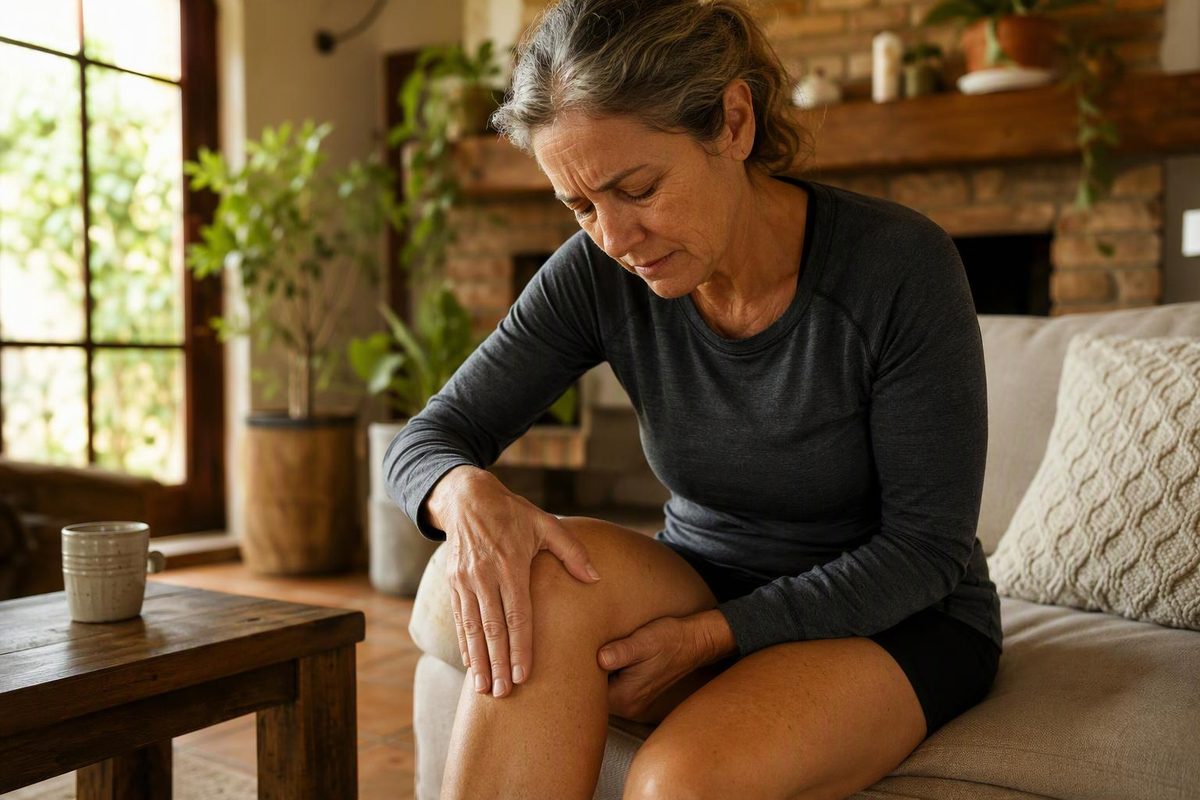
No visible swelling is one useful clue—not proof that your knee is uninjured. With pain on the inner or outer side, the more useful next questions are how it started, whether you can walk and straighten the knee, and whether it locks or gives way. Clinical evaluation uses these features together rather than relying on swelling alone. AAFP’s knee-evaluation review
What absent swelling does—and does not—tell you
An effusion means excess fluid inside the joint. In people with an acute knee injury, an examination finding no effusion lowers the likelihood of an internal injury, such as a ligament or meniscus tear. It does not reduce that likelihood to zero. Importantly, that evidence combines the patient’s report of swelling with a physical examination—not simply whether the knee looks puffy in a mirror. AAFP’s review of acute knee injuries
Two limits matter:
- It may be too early for swelling. After a meniscus tear, swelling and stiffness can develop gradually over two to three days. Many people can still walk immediately after the injury, so neither walking nor an initially normal-looking knee excludes a tear. AAOS meniscus guidance
- Pain may involve tissues around the joint. For example, iliotibial band syndrome involves a band of connective tissue along the outside of the thigh and can cause activity-related outer-knee aching or burning that improves with rest. That is a possible activity pattern, not a diagnosis established by absent swelling. AAOS IT band guidance
The practical distinction is between no swelling plus mild, improving symptoms and preserved movement, and no swelling despite substantial pain or lost function. Do not wait for swelling to appear before taking the second pattern seriously.
Which clues are more useful now?
Note these details rather than repeatedly pressing or twisting the knee to test it:
- A definite twist, fall or blow: this makes the injury history important even without swelling. Inner or outer joint-line pain—the meeting point of the thighbone and shinbone—can occur with meniscus or side-ligament injuries.
- A gradual onset during repeated activity: outer-knee pain in runners or cyclists can fit an IT band pattern.
- Tenderness below the inner joint line: pain roughly two to three inches below the joint can occur with pes anserine bursitis, irritation of a small cushioning sac near the tendons. Its symptoms can overlap with other injuries.
These are clues, not home diagnoses. AAFP and AAOS describe those patterns and their overlap. For a fuller location-based comparison, see inner versus outer knee pain.
When no swelling should not delay care
Seek urgent medical advice if:
- the pain is very severe;
- you cannot move the knee or put weight on the leg;
- the knee has changed shape or you have had significant trauma within the past week, such as a fall from height or a direct blow;
- it locks, gives way or clicks painfully;
- you have fever or feel shivery, with redness or heat around the knee.
These warning signs warrant attention whether or not you can see swelling. NHS knee-pain guidance and NHS inform
What to try if symptoms are mild
If there are no warning signs and you can walk and move the knee, a short period of activity adjustment is reasonable:
- Reduce the activity that provokes pain, especially running, repeated stairs or heavy lifting.
- Keep gentle movement within what your symptoms allow rather than holding the knee still all day.
- If helpful, use a cold pack through a towel for up to 20 minutes, leaving a few hours between applications. It can ease pain even without visible swelling. Avoid it if you have impaired sensation or circulation, and stop if your skin becomes red, discoloured or blistered.
These steps follow NHS inform’s self-care advice; absent swelling alone is not clearance to resume sport.
Track whether ordinary walking and bending become easier. Seek assessment sooner if symptoms worsen, and arrange a routine appointment if pain is not improving within a few weeks. You do not need to develop swelling to justify getting the knee checked. NHS