
Pain on the Side of the Knee: Inner vs Outer Causes
Inner or outer knee pain? Compare injury and activity patterns, learn sensible first steps, and recognize symptoms that need urgent assessment.
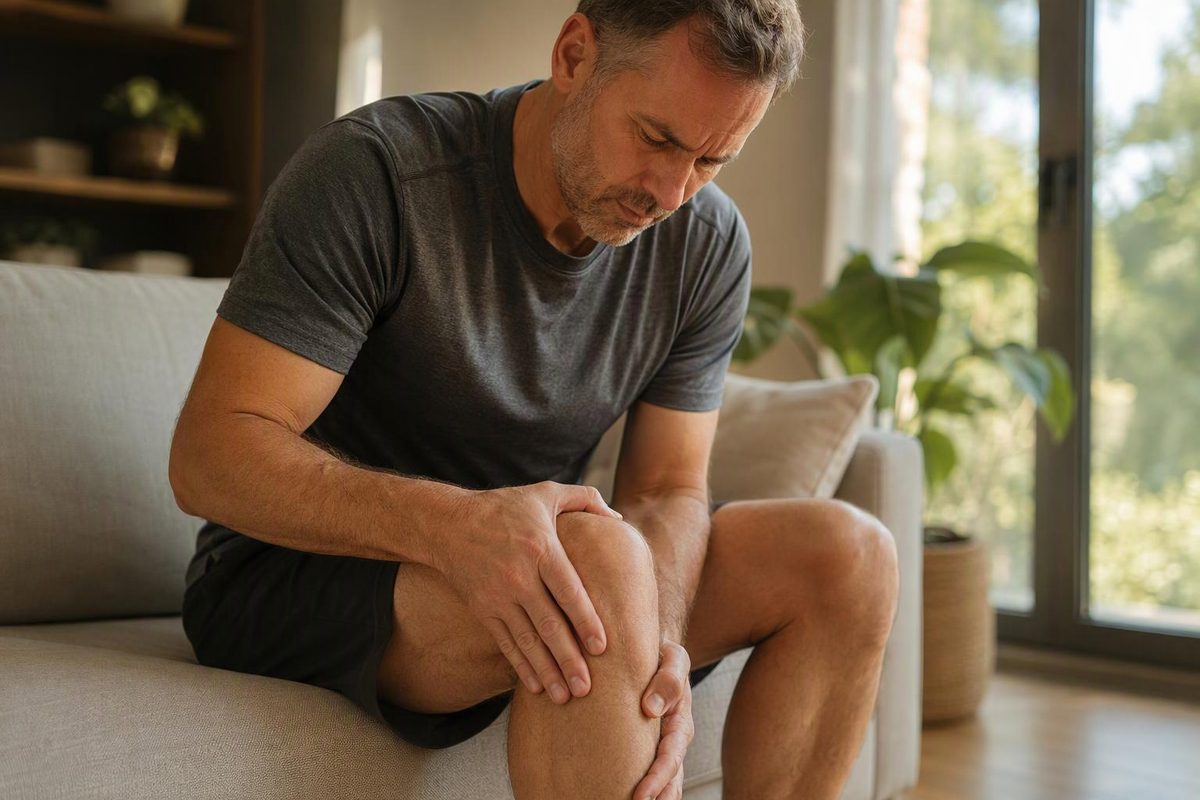
Pain on the side of the knee can come from a ligament injury, a meniscus problem, irritated tissues around the joint, or arthritis. The useful starting point is which side hurts, exactly where, and how the pain began—not the location alone.
The inner (medial) side faces your other knee. The outer (lateral) side faces away from it. Notice whether the sore spot is at the joint line—the level where the thighbone and shinbone meet—or a few inches below it. Then consider whether symptoms followed a twist or impact, built up during exercise, or developed gradually without an obvious injury.
When side-of-knee pain needs urgent care
Seek urgent medical advice today if your knee:
- Is very painful, badly swollen, or has changed shape.
- Cannot take weight or cannot move.
- Locks, gives way, or clicks painfully.
- Is hot or red and you also have a fever, chills, or feel unwell; this can indicate infection.
These are reasons for assessment rather than trying an exercise plan first. NHS knee-pain guidance distinguishes painful clicking from painless clicking, which is commonly normal. If swelling is a major part of your symptoms, see our guide to knee pain and swelling.
Pain on the inner side
After a twist, direction change, or blow: an MCL injury is possible
The medial collateral ligament, or MCL, connects the thighbone to the shinbone along the inner knee and helps control sideways movement. An injury can cause inner-side pain, tenderness, local swelling, stiffness, or a feeling that the knee is giving out. A blow to the outside of the knee can injure this inside ligament. AAOS explains collateral ligament injuries.
Pain there does not tell you whether the ligament is mildly stretched, partly torn, or completely torn. That distinction requires an examination.
A tender spot below the inner joint: pes anserine bursitis is possible
A bursa is a small fluid-filled cushion between tissues. Pes anserine bursitis affects a cushion near tendons on the inner upper shin. Its typical sore spot is about 2–3 inches below the knee joint, rather than directly at the joint line.
Pain may build gradually and worsen with exercise or climbing stairs. However, this pattern can resemble an MCL sprain, a medial meniscus tear, or a stress fracture; pinpoint tenderness is not a home diagnostic test. AAOS describes this location and the overlapping symptoms.
Pain on the outer side
Pain that builds during running: consider IT band syndrome
The iliotibial, or IT, band is a thick band of tissue running down the outside of the thigh toward the shin. IT band syndrome commonly affects distance runners and can cause aching or burning on the outer knee.
Symptoms may begin near the end of a workout, then start earlier as the problem worsens. Going up or down stairs can aggravate it. But outer-knee pain during exercise is not automatically IT band syndrome: a clinician may need to distinguish it from a meniscus problem or arthritis. Johns Hopkins explains the symptom pattern and assessment.
After an impact or sideways force: an LCL injury is possible
The lateral collateral ligament, or LCL, supports the outer knee. An injury can cause outer-side tenderness, swelling, stiffness, and instability. A blow to the inside of the knee can stress this outside ligament. AAOS notes that associated knee injuries also affect treatment.
Problems that can affect either side
Meniscus problems: Each knee has an inner and outer cartilage cushion called a meniscus. Tears can follow a pivot or develop as tissue changes with age. Joint-line tenderness, swelling, catching, or reduced movement may raise suspicion, but other injuries can produce similar symptoms. Being able to walk after a twist does not rule out a tear. AAOS describes meniscus symptoms and diagnosis.
Arthritis: Gradually developing pain with stiffness after rest, swelling, and activity-related flares may fit arthritis. It can be concentrated in one part of the knee, but side pain alone does not establish the diagnosis. AAOS explains knee arthritis patterns.
What to do next if symptoms are mild
If none of the urgent signs above applies, temporarily reduce activities that provoke pain. Avoid repeatedly testing it with running, twisting, or deep bends. For short-term relief, the NHS recommends a wrapped ice pack for up to 20 minutes every 2–3 hours. Ask a pharmacist which pain medicine is suitable for you.
Strengthening may be part of recovery, but the plan should match the cause. For example, confirmed IT band syndrome may be managed with activity modification, a gradual return, and hip-and-knee exercises; a ligament injury may need protection with a brace or limits on weight-bearing first.
Arrange an assessment if pain is not improving within a few weeks, or sooner if it is worsening or followed a significant injury. Bring three details: the exact sore spot, what happened when symptoms began, and which movements now trigger them. Those are more useful than trying to name the condition yourself.