
Exercises for a Hurt Knee: A Gentle Starting Point
Try gentle knee movements with clear form cues, a cautious starting dose, pain checks and signs that mean you should seek care before exercising.
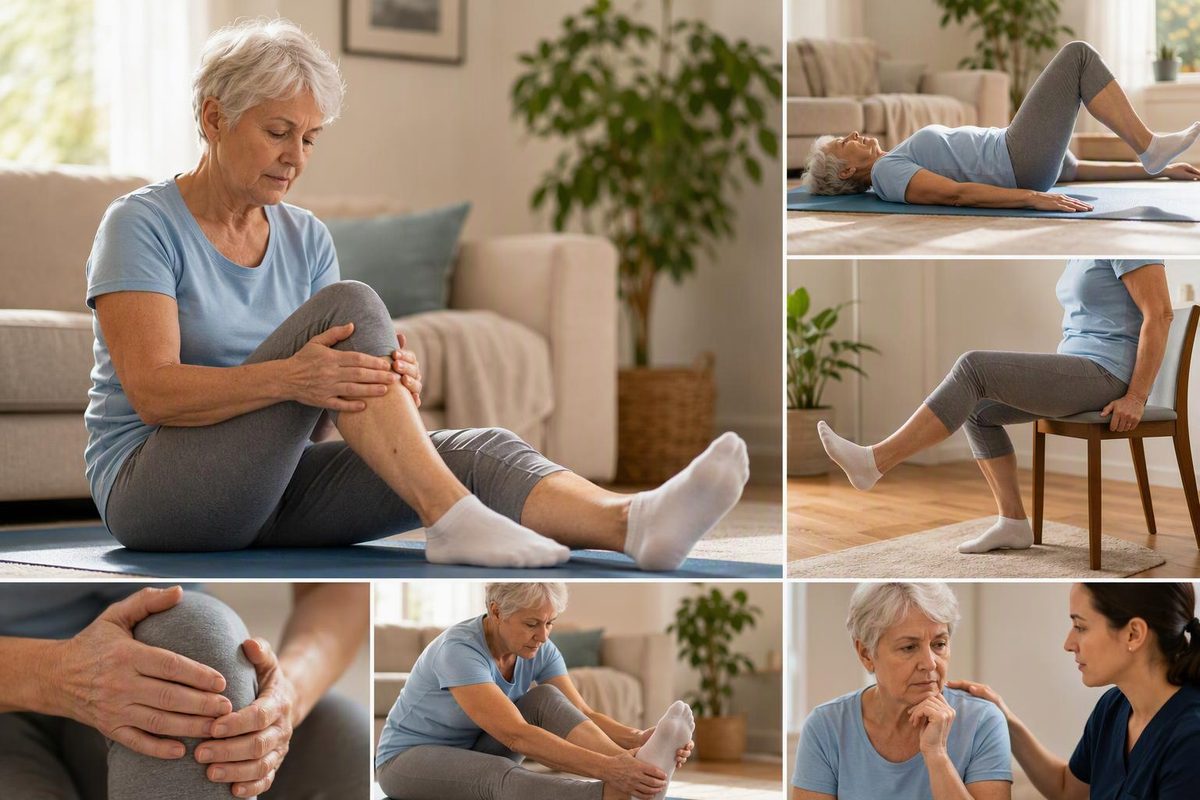
For a mildly sore knee, gentle bending and thigh-muscle exercises can be a starting point. Aim to regain comfortable movement and build strength gradually, rather than jumping straight into a demanding workout.
But “hurt knee” can mean anything from soreness after extra walking to a significant injury. These exercises are general education for a new, mild knee problem, not a treatment plan for a diagnosed injury. If you have a diagnosed knee condition, recent surgery or instructions about weight-bearing or movement, follow your healthcare professional’s plan instead. NHS inform makes this distinction in its knee-exercise guidance.
When to get help before exercising
Seek urgent medical advice rather than testing exercises if:
- Your knee is very painful, you cannot move it or you cannot put weight on it.
- It is badly swollen or has changed shape.
- It locks, gives way or clicks painfully.
- It is hot or red and you have a fever or feel shivery or unwell.
These are NHS warning signs for knee pain. A substantial twist, fall or collision with ongoing symptoms also deserves assessment before you choose a rehabilitation program. Arrange a routine appointment if knee pain is not improving within a few weeks; you do not need to complete an exercise program first.
Four gentle exercises to try
If symptoms are mild and none of the warning signs applies, begin with one or two exercises, rather than doing the whole list. Use a bed or another safe, comfortable surface.
The movements and holds below come from NHS inform’s exercises for new knee problems. Move only as far as is comfortable—do not force the knee to bend or straighten.
1. Heel slide
This gently practices bending and straightening.
- Lie on your back with both legs straight.
- Slowly slide the sore leg’s heel toward you, bending the knee within a comfortable range.
- Hold for 2 seconds, then slide the heel away to straighten the leg again.
One bend-and-straighten cycle is one repetition.
2. Thigh tightening, or a static quad exercise
The quadriceps are the muscles at the front of your thigh. This exercise works them without repeatedly bending the knee.
- Lie with the sore leg straight.
- Tighten the front thigh muscles and gently press the back of the knee toward the bed.
- Hold for up to 10 seconds, then relax fully.
Use a shorter hold if you cannot maintain it comfortably.
3. Supported knee straightening
- Lie down with a rolled blanket beneath your knees.
- Press the sore knee into the roll and straighten it as far as is comfortable, lifting the foot from the surface.
- Hold for up to 10 seconds, then relax.
Keep the knee supported on the roll rather than lifting the entire leg.
4. Straight-leg raise
Try this only if keeping the knee straight is comfortable.
- Lie on your back with the other knee bent and the sore leg straight.
- Tighten the front thigh muscles, then slowly lift the straight leg off the bed.
- Hold for up to 5 seconds and lower slowly.
If you cannot keep the knee straight, skip this movement rather than struggling through it. Cambridge University Hospitals’ injury-rehabilitation leaflet also emphasizes keeping the knee straight and lowering under control.
How much—and how should it feel?
Start with 2–3 repetitions of your chosen movements at a time. Small bouts spread through the day are a reasonable starting approach. If they become easier, add 1–2 repetitions every few days rather than increasing everything at once. This follows NHS inform’s gradual starting guidance.
Keep discomfort mild. If it rises, reduce the movement range, repetitions or hold time, and allow more rest. Stop an exercise if it causes new pain or worsens your symptoms.
Check again the next morning: your existing knee pain should be no worse overall. Short-lived muscle soreness can occur with unfamiliar exercise, but worsening knee symptoms mean the dose or exercise needs changing—not pushing through. If your knee pain worsens while following this advice, talk to a healthcare professional. NHS inform provides this next-morning check and advice on when to stop.
Once these movements are comfortable and daily activity is getting easier, consider a gradual knee-strengthening plan. Completing gentle exercises alone does not establish readiness for running, jumping or sport.