
ACL Tear Recovery Time: From Walking to Sport
Daily life may improve within weeks; jogging may be appropriate after several months, while unrestricted sport commonly takes 6–12 months or longer.
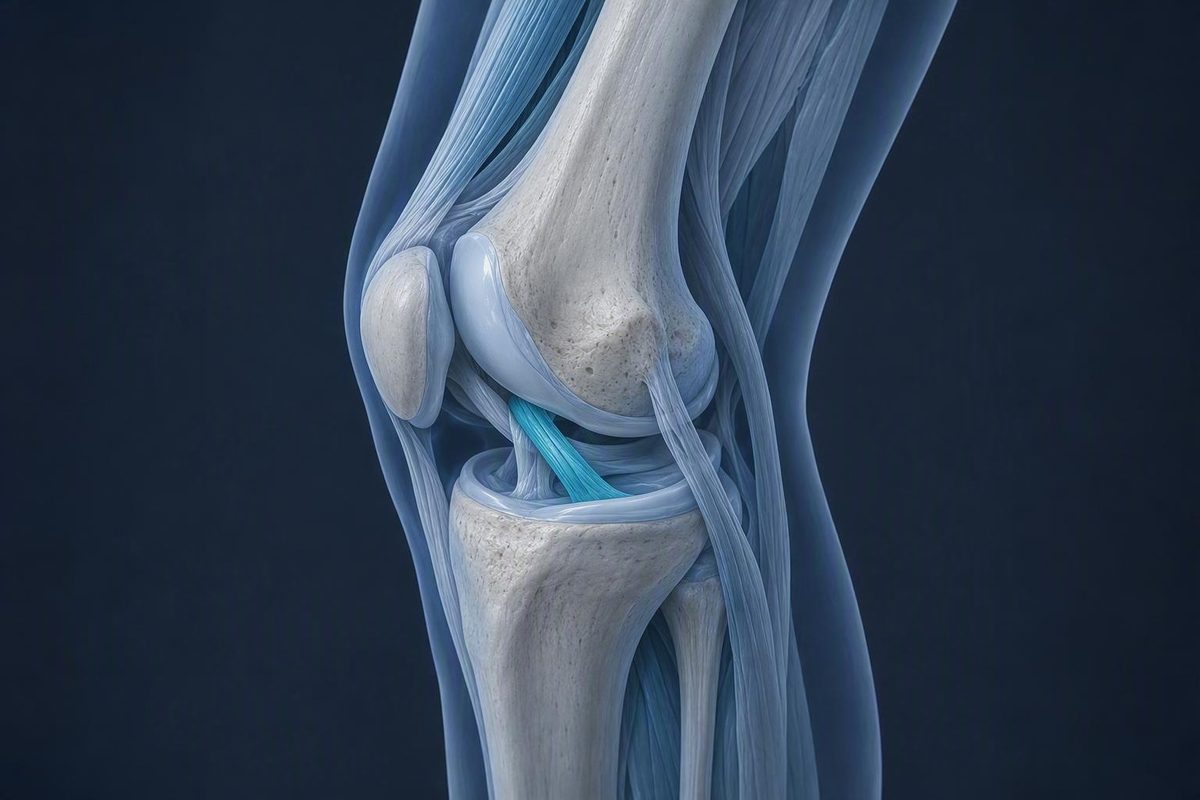
ACL tear recovery has several finish lines. A general recovery estimate is about six to nine months, although competitive athletes may need longer, according to Cleveland Clinic’s ACL tear guidance.
After ACL reconstruction, AAOS gives a broad 6-to-12-month range for full sports participation. Some people need longer. These are not guaranteed clearance dates. Progress should also depend on swelling, motion, stability, strength, movement control, confidence and assessment by your clinical team.
The short answer: ACL recovery has more than one finish line
Walking around the house, returning to work, driving, jogging and competing in a cutting sport place very different demands on the knee. Being ready for one does not establish readiness for the next.
The American Academy of Orthopaedic Surgeons (AAOS) places return to full sports participation within a broad 6-to-12-month range. The NHS similarly says that returning to sport after ACL surgery can take up to one year, while physiotherapy begins much earlier and continues for months. In other words, being active in rehabilitation is not the same as being ready for sport. See the NHS recovery guidance for ACL surgery.
| Milestone after reconstruction | Approximate expectation | What matters before progression |
|---|---|---|
| Comfortable daily movement | Usually improves during early rehabilitation | Swelling, pain, knee motion, safe walking and quadriceps control |
| Return to work | Often around 4–6 weeks after surgery, but highly job-dependent | Mobility, comfort, transport and ability to perform duties safely |
| Straight-line jogging | Sometimes around months 3–4 | A quiet knee, sufficient strength, good control and rehabilitation-team approval |
| Sport-specific training | Progressively after adequate running and movement control, as cleared | Control during faster, more complex movement without instability or a symptom flare |
| Unrestricted sport | Commonly 6–12 months; often month 9 or later for high-risk sport | Objective testing, stability, movement quality, confidence and clinical clearance |
The work estimate comes from NHS guidance. The jogging estimate and criteria-based progression reflect guidance from Cambridge University Hospitals; it does not prescribe one fixed start date for all sport-specific training. The 6-to-12-month full-sport range comes from AAOS guidance on ACL treatment.
These dates are planning estimates, not promises. Someone can reach one milestone quickly while taking much longer to reach another.
Recovery with surgery versus rehabilitation without surgery
ACL recovery follows two distinct paths:
- ACL reconstruction followed by postoperative rehabilitation
- Nonsurgical rehabilitation with monitoring and, where necessary, activity modification
Reconstruction replaces the injured ligament with a graft. Rehabilitation begins around surgery and progresses from controlling swelling and restoring motion to strength, running, agility and sport-specific work.
Nonsurgical treatment may be considered for selected people with an isolated ACL tear, particularly when the knee does not repeatedly give way and the person’s goals do not involve demanding pivoting or cutting. The decision also depends on associated meniscus, cartilage or ligament damage, knee stability and willingness to modify activities.
For a partial ACL tear, rehabilitation generally lasts at least three months. Follow-up matters because reduced pain does not prove that the knee is mechanically stable. Persistent buckling or giving way warrants clinical reassessment rather than simply waiting for more time to pass. AAOS explains partial-tear rehabilitation and the considerations for surgical and nonsurgical care.
There is no equally reliable universal full-recovery deadline for nonsurgical treatment. One person may regain stable everyday function without reconstruction, while another may continue to experience instability during turning, uneven-ground walking or sport. The meaningful endpoint is whether the knee can support the activities the person needs to perform safely.
Timing matters: The decision about whether and when to operate is separate from the rehabilitation timeline. Discuss it promptly with your orthopaedic team, particularly if the knee gives way or other structures are injured; do not use a recovery estimate as a deadline for surgery.
ACL reconstruction timeline: milestones from surgery to sport
Rehabilitation after ACL reconstruction should be criteria-based rather than governed by a rigid calendar. Early work addresses swelling, knee extension and quadriceps activation. Later phases develop strength, balance, running ability and sport-specific control.
| Approximate phase | Rehabilitation focus | Conditions for progression |
|---|---|---|
| Surgery to about 2 weeks | Control swelling, restore full extension, activate the quadriceps and progress weight-bearing as directed | Improving extension, safe mobility, manageable symptoms and better muscle activation |
| Weeks 2–6 | Improve flexion, walking pattern, basic strength and daily mobility | Stable gait, improving motion and no significant reaction to added loading |
| Weeks 6–12 | Develop strength, balance, endurance and controlled movement while the graft continues healing | Adequate control during progressively harder exercise without persistent swelling |
| Months 3–4 | Consider straight-line jogging for some patients | Sufficient strength and knee control, minimal symptoms and rehabilitation-team approval |
| Later rehabilitation, after running readiness | Progress controlled agility and sport-specific drills | Good mechanics as speed and complexity increase, without instability or recurring symptoms |
| Month 9 and beyond | Consider return to pivoting or high-risk sport | Objective functional testing, psychological readiness and clinical clearance |
This progression reflects the criteria-based approach described in the Cambridge University Hospitals ACL reconstruction rehabilitation guide. Institutional protocols differ, and associated meniscus, cartilage or ligament procedures can modify every phase.
Exercise and weight-bearing instructions should come from the treating team, especially after a meniscus or other additional repair. Feeling comfortable during daily tasks does not establish readiness for running or sudden changes of direction.
Walking, crutches, driving and work: practical estimates
Many people leave hospital on the day of ACL reconstruction after demonstrating safe mobility.
One illustrative Emory Healthcare protocol reports that some patients stop using crutches approximately 7 to 10 days after an isolated reconstruction as comfort and weight-bearing tolerance improve. Meniscus repair or reconstruction of another ligament can require restricted weight-bearing for several weeks. These figures describe one institutional protocol, not a universal standard. Emory Healthcare provides the illustrative crutch and driving timeline.
Do not discard crutches or stop using a prescribed brace merely because an estimated date has arrived. A limp, inadequate quadriceps control or procedure-specific weight-bearing restrictions may mean continued support is appropriate.
The NHS estimates that return to work is often possible around four to six weeks after surgery, although the actual timing depends heavily on the job. Work involving prolonged standing, kneeling, climbing, lifting or rapid direction changes may require substantially more rehabilitation or temporary modified duties.
Driving has no universal clearance date. The NHS advises waiting until the medical team says you are fit to drive and telling your insurer. Being able to sit in a car is not the same as being able to perform an emergency stop safely.
None of these estimates should be treated as self-clearance rules. Ask the treating team what mobility, strength and control they expect before ending crutch use, driving or returning to specific work duties.
Why six months is not automatic clearance for sport
Six months after reconstruction is not an automatic return-to-sport date. Some institutional protocols describe a possible criteria-based return around that point, but more cautious guidance favors month nine or later for pivoting and other high-risk competition.
Readiness usually considers:
- Pain and swelling during and after activity
- Full or near-full range of motion
- Clinical knee stability
- Quadriceps, hamstring and lower-limb strength
- Muscular endurance
- Balance and proprioception
- Movement quality during landing, deceleration and direction changes
- Functional control at sport-relevant speed
- Confidence and psychological readiness
A hop test may form part of a functional assessment, but it cannot independently prove readiness for sport. It should not be used as a home pass-or-fail clearance test.
The stages of return also need to be distinguished:
- Straight-line jogging is relatively predictable and limits rapid rotation.
- Controlled agility introduces planned acceleration, deceleration and direction changes.
- Noncontact training adds sport-specific speed and decision-making without full competitive exposure.
- Unrestricted competition includes unpredictable reactions, fatigue, contact and maximal effort.
A person may jog well in a straight line but remain unprepared for cutting or reacting to another player. Completing noncontact practice likewise does not establish readiness for competition.
Cambridge University Hospitals describes evidence favoring both satisfaction of return-to-sport criteria and waiting at least nine months to reduce reinjury risk. Neither step guarantees that another injury will be avoided, but returning earlier solely because six months have passed ignores strength, mechanics, symptoms and confidence. See the CUH criteria-based return-to-sport guidance.
Final decisions about running, cutting and competition should come from the treating surgeon and rehabilitation professional.
What can make ACL recovery take longer?
Recovery may extend beyond the usual estimate when the original injury or operation involves more than an isolated ACL reconstruction. A repaired meniscus or another reconstructed ligament can change weight-bearing instructions, extend crutch use and delay later phases.
Other factors that may slow progression include:
- Cartilage or other structural damage in the knee
- Persistent or recurrent swelling
- Difficulty regaining full knee extension
- Ongoing quadriceps weakness
- Poor balance or movement control
- Recurrent instability
- Symptoms that flare as exercise load increases
- High athletic or occupational demands
A pain-free knee is not necessarily a sport-ready knee.
Progression may need to pause when added running, strength work or agility causes swelling, pain or loss of motion. That does not automatically mean the reconstruction has failed, but it does mean the rehabilitation load and the condition of the knee should be reviewed.
There is no universal number of extra weeks to add for a meniscus repair, cartilage injury or setback. Restrictions depend on the structure involved, the exact procedure and the surgeon’s instructions. Returning to high-impact or pivoting activity before adequate healing and functional recovery increases the risk of another injury.
When to contact your clinical team
Seek urgent medical advice after surgery for worsening knee pain or swelling, fever, wound discharge, or throbbing/cramping pain in the leg. These can signal infection or a blood clot; do not simply reduce exercise and wait.
Leg pain or swelling with chest pain or difficulty breathing needs emergency assessment. Call your local emergency number; do not drive yourself. The NHS complication guidance distinguishes these emergency symptoms from problems requiring urgent clinical review.
Recurrent giving way also requires reassessment, particularly during nonsurgical rehabilitation, because continued instability may change the discussion about activity modification, further evaluation or reconstruction. Locking after an injury also deserves clinical attention.
For a useful follow-up appointment, consider asking:
- Is my current swelling level and range of motion acceptable?
- Which strength or movement criteria must I meet next?
- Is my walking pattern ready for progression away from crutches?
- Do associated meniscus, cartilage or ligament injuries alter my schedule?
- What must I demonstrate before starting to run?
- Which tests will be used before sport-specific training or competition?
- What should I do if swelling or stiffness returns after exercise?
This article provides general education. It cannot diagnose an ACL tear, prescribe an individual rehabilitation protocol or provide clearance for work, driving, running or sport.
Frequently asked questions
Does routine bracing speed recovery after ACL reconstruction?
Not routinely after an isolated primary ACL reconstruction. The AAOS 2022 clinical practice guideline does not recommend routine functional bracing after isolated primary ACL reconstruction, because available evidence has not shown a clinical benefit. This concerns functional bracing for return to activity, not every temporary postoperative brace.
That does not mean a brace is never appropriate. Use and discontinue it according to the treating team’s instructions.
Does ACL reconstruction guarantee a return to the same level of sport?
No. Reconstruction can restore stability and support a return to demanding activity, but it does not guarantee that every athlete will return to the same sport, competitive level or preinjury performance.
The outcome also depends on rehabilitation progress, associated knee damage, strength, movement quality, confidence, sport demands and the absence of further injury. Return to participation and return to preinjury performance are separate goals.
ACL recovery is best understood as a sequence of functional milestones rather than a countdown. Daily life may improve within weeks, jogging may become appropriate after several months, and unrestricted sport commonly takes 6 to 12 months or longer. Use those ranges to frame questions for your surgeon and rehabilitation professional—not to clear yourself for activity.