
Runner's Knee Recovery Time Has 4 Milestones
Tolerating easy running is not the same as being ready for racing, high mileage, hard workouts or downhill routes.
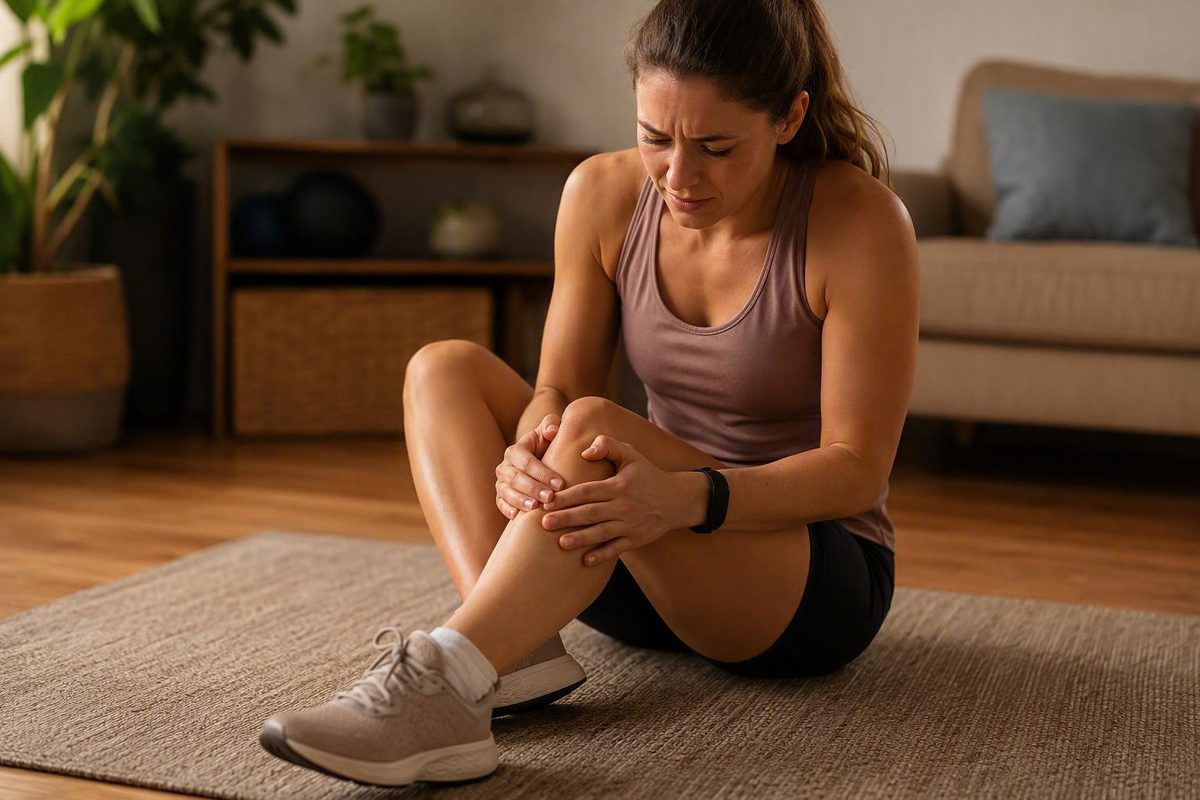
The short answer: expect a range, not a deadline
For many people, a useful runner’s knee recovery time estimate is approximately four to six weeks of conservative management. This is a commonly quoted clinic estimate, not a scientifically validated average or guaranteed deadline. Raleigh Ortho describes four to six weeks as a usual recovery period with conservative treatment.
Another broad estimate is one to two months, although individual recovery may be shorter or substantially longer. A physical-therapy provider attributes the one-to-two-month range to Cleveland Clinic while emphasizing that recovery varies.
Mild or recent symptoms may show meaningful improvement within two to four weeks, while persistent or recurrent symptoms may require several months. “Meaningful improvement” means that pain or daily function is getting better—not necessarily that unrestricted running is appropriate. Athletic Lab presents two to four weeks for meaningful improvement in mild or recent cases and six months or longer for some persistent cases.
Here is a practical summary:
| Symptom pattern | General clinical estimate | What the estimate may mean |
|---|---|---|
| Recent or mild symptoms | Meaningful improvement may begin within 2–4 weeks as estimated by Ivy Rehab | Less pain and better daily function—not necessarily complete recovery |
| Commonly quoted recovery range | Approximately 4–6 weeks according to Raleigh Ortho, or broadly 1–2 months | A planning window for improvement with load modification and rehabilitation |
| Persistent or recurrent symptoms | Several months may be needed according to the clinical ranges published by Ivy Rehab | Progress may be slower when pain has lasted a long time or repeatedly returned |
Every timeline in this table is a general clinical estimate, not a diagnostic category or promise. Terms such as “mild,” “persistent” and “full recovery” are not defined consistently across the clinic sources reporting these ranges.
That distinction matters because “full recovery” may refer to several different outcomes:
- Pain has begun to settle.
- Walking, stairs and sitting are comfortable again.
- Short, easy running is tolerable.
- Previous mileage and harder workouts are manageable.
- Race-specific fitness has returned.
Those outcomes are not interchangeable. Pain can improve before strength, control and impact tolerance have returned. A runner may also tolerate an easy jog before being ready for hills, speed sessions, long runs or racing.
The strongest research source in the supplied evidence—a peer-reviewed narrative review published in 2019—supports individualized assessment and exercise addressing both hip and knee musculature. It does not provide a validated average recovery duration. Four to six weeks should therefore be treated as a planning estimate rather than a finish line. The review discusses conservative treatment for common running-related knee conditions without establishing a standard healing timeline.
A better question than “Has it been six weeks?” is: What can the knee tolerate now, and how does it respond later that day and the following morning?
First confirm what “runner’s knee” is describing
Runner’s knee commonly refers to patellofemoral pain syndrome, usually experienced as pain at the front of, around or behind the kneecap. A typical pattern is gradual discomfort associated with activities that load a bent knee, including:
- Running
- Squatting
- Climbing or descending stairs
- Kneeling
- Jumping
- Sitting for a long time with the knee bent
That pattern can make patellofemoral pain a reasonable possibility, but it does not confirm the diagnosis. “Runner’s knee” is sometimes used as a broad, nonspecific label for several sources of pain around or under the kneecap. Orthopedic Specialists of Southwest Florida explicitly describes it as an umbrella term.
Diagnostic uncertainty limits the precision of any recovery estimate. Similar pain could involve the patellar tendon, the iliotibial band, another joint structure or an injury caused by a twist, fall or impact. These problems do not necessarily respond to the same exercises or follow the same timeline.
It is also misleading to assume that every case comes from one universal fault. Runner’s knee should not automatically be explained as:
- Cartilage “wearing away”
- A kneecap that is permanently out of alignment
- Overpronation
- One weak muscle
- One incorrect element of running form
Patellofemoral pain is better approached as a potentially multifactorial problem. Training demand, strength, movement control, joint mobility, running mechanics and recovery between sessions may all matter, but their relevance differs among runners. Some weaknesses may also develop because the knee has been painful rather than being the original cause.
If stairs are your main trigger, Knee Pain Zone’s guide to knee pain while walking up and down stairs provides more context about that symptom pattern. It is additional educational material, not independent evidence for a runner’s-knee recovery deadline.
A professional assessment becomes more valuable when the symptom pattern is unclear, the pain followed an injury, the knee is swelling or sensible management is not producing the expected response. A more accurate diagnosis makes any recovery forecast more useful.
Recovery has four different milestones
“Better” can mean several things. Separating recovery into four milestones helps prevent early pain relief from being mistaken for readiness to resume normal training.
1. Symptoms begin to settle
The first change may be lower pain intensity, less soreness after activity or fewer symptoms at rest. You might notice that the knee takes longer to become uncomfortable or settles more quickly after an irritating task.
This is useful progress, but it is only the first stage. A few comfortable days—or being pain-free while sitting—does not establish that the knee can tolerate repeated running impacts.
2. Daily function becomes comfortable
The next milestone is improved tolerance of ordinary life. Depending on your starting point, that may include:
- Walking at a normal pace
- Getting up from a chair
- Using stairs
- Sitting with the knee bent
- Performing a controlled knee-bending task
- Completing routine work or household activities
Daily function provides more information than pain at rest because it shows how the knee responds to some load.
3. Easy running becomes tolerable
Readiness for easy running is not determined by the calendar alone. It generally involves a combination of:
- Lower symptom irritability
- Manageable walking and stair use
- Adequate leg strength
- Reasonable single-leg control
- Stable movement rather than protective limping
- Tolerance of controlled lower-limb loading
- No meaningful flare later that day or the following morning
Clinical return-to-running guidance emphasizes reduced irritability together with a foundation of motor control, stability and strength before advanced loading and running are reintroduced. It recommends beginning on flat, forgiving surfaces and adjusting the initial running volume to symptoms and experience. The Prehab Guys’ rehabilitation guide outlines this capacity-based progression.
No single squat, step-down, stair, hop or strength test in the supplied evidence has been validated as proof of complete recovery. These tasks can provide useful information, but passing one does not guarantee that the knee will tolerate a full training week.
4. Full training or racing becomes sustainable
A short, easy run is a lower hurdle than a long run, hard interval session, hilly route or race. Returning to full training may require additional time to rebuild:
- Repeated-impact tolerance
- Running-specific strength and power
- Downhill control
- Weekly mileage tolerance
- Speed and fatigue resistance
- Confidence in the knee
- Cardiovascular and race-specific conditioning
This is why race-ready fitness can lag behind symptom improvement.
Calendar estimates remain useful for planning, but they should be paired with function. At each stage, consider whether the current load is tolerated during the task, afterward and the next morning.
Why one runner improves in weeks and another needs months
Runner’s-knee recovery is often easier to understand as a capacity-versus-load problem. Running, gym work and daily activity place demand on the knee and the rest of the lower limb. Rehabilitation builds the capacity to meet that demand. During recovery, demand may need to fall temporarily while capacity is gradually restored.
Several categories influence how quickly that balance improves.
Symptom history
Recent symptoms generally have a more favorable estimated timeline than pain that has lasted for months or repeatedly returned. A newly irritable knee may respond promptly to a suitable change in training. A longstanding problem may require more time to identify aggravating loads, restore lost capacity and build confidence in harder activity.
Training demand
Symptoms may continue when the knee is repeatedly exposed to more load than it currently tolerates. Relevant changes can include:
- A sudden increase in mileage
- More running days per week
- Faster running
- New interval sessions
- More hills or stairs
- Repeated downhill running
- Less recovery between sessions
- Increasing gym and running loads at the same time
The problem is not necessarily one “bad” workout. It may be the combined effect of several changes made without enough adaptation time.
Identifying and modifying the variable that most reliably provokes symptoms can make the knee’s response easier to interpret.
Rehabilitation consistency
Progressive strengthening is not an instant fix. Capacity develops through repeated, tolerable exposure over time. Sporadic exercise may not provide enough stimulus, while aggressive loading that repeatedly causes prolonged flares can make consistency difficult.
Consistency does not guarantee a particular recovery date. It creates an opportunity to adapt and helps reveal what the knee can tolerate without several variables changing at once.
Physical capacity and movement
Hip, quadriceps, glute and calf capacity can all be relevant because running distributes work through the lower limb. Single-leg control, mobility and the ability to absorb or produce force may also influence how someone responds to training.
Running mechanics sometimes matter, but no one form fault explains every case. Cadence, stride, trunk position, ankle mobility and leg alignment should be considered in context rather than treated as universal diagnoses.
The peer-reviewed narrative review recommends individualized evaluation because patellofemoral pain may involve a combination of training, muscular, flexibility and biomechanical factors. It describes evidence concerning some alignment factors as conflicting and supports exercise targeting both hip and knee musculature rather than the knee alone. These conclusions are summarized in the 2019 review of common knee injuries in runners.
Diagnostic and individual factors
Prior injury, footwear, sleep, nutrition, age, current activity level and daily habits may influence recovery. The available evidence does not quantify how much any one factor changes the timeline, so none can reliably calculate an individual recovery date.
Diagnosis is more fundamental. Patellofemoral pain, patellar tendon pain, iliotibial-band-related pain and traumatic knee injuries are not interchangeable. If the initial label is incorrect, a reasonable-looking rehabilitation plan may still fail to address the actual problem.
If recovery has stalled
Review these possibilities:
- The training load has not actually changed. Mileage may be lower, but pace, frequency or gym loading remains high.
- Hills or downhills keep provoking symptoms. The knee may not yet tolerate those demands.
- Several variables are progressing together. Duration, frequency, speed and elevation have all increased at once.
- Strengthening is inconsistent. Sessions are too sporadic to build capacity.
- Strengthening progresses too quickly. Each advancement causes a prolonged flare.
- Cross-training still irritates the knee. “Low impact” does not automatically mean tolerable.
- Daily activity is being overlooked. Work, stairs, kneeling or prolonged sitting may contribute to total load.
- The initial diagnosis may be wrong or incomplete. A different condition may need a different approach.
It may indicate that the latest increase exceeded current capacity and that the next step should be smaller.
What to do while symptoms are irritable
The choice is not limited to complete inactivity or unrestricted running. For many people, the practical middle ground is relative rest: reduce activities that clearly provoke the knee while retaining movement that remains tolerable.
A temporary break from running may be appropriate when running:
- Produces escalating pain
- Causes limping or another gait change
- Makes symptoms linger substantially afterward
- Leaves the knee meaningfully worse the next morning
- Makes ordinary walking or stairs increasingly difficult
If running remains possible without those responses, modification may be enough. Potential changes include reducing:
- Mileage
- Pace
- Frequency
- Long-run duration
- Hills
- Speed sessions
- Downhill running
A physician-practice guide recommends relative rest rather than complete inactivity, pain-free cross-training where appropriate and a gradual return instead of immediate restoration of normal mileage. It also advises evaluation for worsening pain, functional limitation or failure to improve. The guidance is framed around activity modification and targeted rehabilitation.
Change the smallest number of variables needed to obtain a stable response. This preserves some activity where appropriate and makes it easier to identify what the knee tolerates.
Maintaining fitness without repeatedly provoking the knee
Possible cross-training options include:
- Swimming
- Pool running
- Water walking
- Easy cycling
- Elliptical exercise
These are options, not automatic substitutes. Cycling can still irritate a painful knee, and pool exercise may be unsuitable if the movement reproduces symptoms. Modify or stop an alternative if pain escalates, movement changes, discomfort persists substantially afterward or the knee is clearly worse the following day.
Short-term symptom management
Ice, light compression and elevation may provide short-term relief for some people, particularly when soreness or swelling is present. These measures are optional. They do not correct excessive training demand, restore strength or guarantee faster recovery.
Medication advice is outside the scope of this guide. Suitability depends on health history, contraindications, interactions and other individual factors that require medical or pharmacy guidance.
A simple load-response framework
The following is a practical synthesis rather than a validated clearance system.
Maintain the activity when:
- Symptoms remain tolerable and stable.
- Movement stays normal.
- Discomfort settles promptly.
- There is no meaningful next-morning increase.
Reduce or modify it when:
- Pain rises as the activity continues.
- You compensate, limp or change technique.
- Soreness persists longer than expected.
- The knee is clearly worse later or the following morning.
Seek assessment when:
- Normal walking, stairs, work or sleep is substantially affected.
- Symptoms are worsening rather than stabilizing.
- Swelling, locking, instability or trauma-related symptoms are present.
- Sensible modification and rehabilitation are not producing progress.
The goal is not to avoid every sensation indefinitely. It is to find a level of activity the knee can absorb consistently while capacity is rebuilt.
Build the strength and control needed for running
The best-supported core rehabilitation principle in the supplied evidence is progressive exercise addressing both hip and knee musculature. Knee-only exercise or passive treatment alone should not be presented as the default solution.
That does not mean every runner needs an identical exercise list. The program should progressively prepare the relevant muscles and movement patterns for the demands of running.
Start with tolerable foundational strength
Early exercise should be demanding enough to begin building capacity but tolerable enough to repeat consistently. Illustrative options may include:
- Bridges
- Side-lying hip exercises
- Controlled knee-extension or knee-bending work
- Supported sit-to-stand movements
- Short step-ups
These are examples, not universal prescriptions. An exercise suitable for one runner may be too easy, too difficult or too irritating for another.
There is no single evidence-based set-and-repetition formula in the supplied material. Dosage should reflect current capacity, symptom irritability, training background and the response later that day and the following morning.
Develop single-leg control
Running is a repeated single-leg activity, so rehabilitation generally needs to progress beyond bilateral or low-demand movements. Later foundational work may include:
- Step-ups
- Controlled step-downs
- Split-stance exercises
- Supported single-leg squats
- Other controlled single-leg loading
The objective is not to perform one perfect test. It is to build enough strength and control to repeat the movement under gradually increasing demand without a meaningful flare.
Increase loading progressively
As symptoms become less irritable, resistance, range, complexity or movement speed may increase. Eccentric control—the ability to control force while a muscle lengthens—can become particularly relevant for lowering movements and downhill demands.
Progress should remain individualized. If a harder variation repeatedly causes escalating pain or next-day deterioration, the increase may have been too large. Temporarily returning to the previous tolerable level is load adjustment, not failure.
Restore impact, power and running-specific capacity
Later rehabilitation may incorporate:
- Small jumps
- Hopping
- Landing control
- Plyometric activity
- Faster single-leg movements
- Running drills
- Gradually increasing running exposure
These are later-stage examples, not starting exercises for an acutely irritable knee. Impact and power work make more sense after symptom irritability has decreased and a suitable strength and stability base exists. Clinical progression guidance places single-leg loading, advanced strengthening and power work later in rehabilitation.
Keep adjuncts in perspective
Taping, foot orthoses, braces, manual therapy and selected form changes may be individualized additions. The supplied evidence does not support presenting them as universal cures. Their role may be to make activity more tolerable, address a specific contributing factor or support exercise—not replace progressive rehabilitation.
The general priority is:
- Manage loads that are provoking symptoms.
- Build hip-and-knee strength and broader lower-limb capacity.
- Restore single-leg control.
- Reintroduce impact and running progressively.
- Add an adjunct when there is a clear individual reason.
Use symptoms and function to guide the return to running
Clinical sources do not give one universal pain rule. One physiotherapy source advises using pain as a guide and waiting until running can be completed without pain. The Physiotherapy Place presents this pain-free approach.
Other clinical guidance permits modified running with mild discomfort when it does not escalate, alter mechanics or remain aggravated into the following day. Athletic Lab describes a symptom-monitored approach with discomfort settling within about a day.
Neither position creates a universal rule for every diagnosis and runner. A symptom-monitored approach may be reasonable within a guided rehabilitation plan when discomfort is mild, stable and short-lived.
There is no validated universal numerical pain threshold in the supplied evidence. A “three out of ten” rule, for example, should not be treated as proof that running is safe.
A practical readiness checklist
This checklist is a nonvalidated decision aid, not a medical clearance test:
- Symptoms are less irritable than they were initially.
- Ordinary walking is manageable.
- Stairs are manageable at the level required in daily life.
- Controlled lower-limb loading is tolerated.
- Single-leg movement remains reasonably stable.
- There is no protective limp or obvious compensation.
- The knee does not show a meaningful delayed flare.
- You are willing to begin below your previous training level.
If several items are not met, further load management or rehabilitation may be more useful than testing the knee with a normal run.
Start below your previous level
The first run back should not be a test of lost fitness. Begin with short, easy running on flat, forgiving terrain. Depending on current capacity, this may involve an easy continuous run or a conservative run-walk format. The supplied evidence does not establish one fixed schedule for every runner.
Avoid immediately reintroducing:
- Long runs
- Hard intervals
- Steep hills
- Extended downhill running
- Several running days in succession
- Previous weekly mileage
The first objective is to obtain a stable response, not prove that the knee is fully recovered.
Increase one variable at a time
Running load can change through duration, frequency, speed, terrain and elevation. Increasing several variables together makes it harder to identify what caused a flare.
An example progression might restore:
- Tolerable easy-running duration
- Then frequency
- Then selected faster work or elevation
- Then higher-volume and race-specific demands
This is an example, not a mandatory sequence. Goals, symptoms and previous training may justify a different order.
Do not rely on the familiar “10-percent rule” as a universal guarantee. The supplied evidence does not establish that increasing mileage by a fixed percentage prevents recurrence or makes every progression safe.
Use advance, hold and reduce rules
This is a practical symptom-monitoring framework rather than a validated protocol.
Advance when the current session produces a stable response during the run, afterward and the next morning.
Hold when the response is uncertain. Repeat the same load rather than assuming every week requires an increase.
Reduce, delay or substitute a tolerable alternative when:
- Pain escalates during the run.
- Gait or mechanics change.
- Symptoms remain meaningfully worse the next morning.
- Daily function deteriorates.
- Each session begins from a more irritated baseline.
A mild, stable sensation differs from steadily increasing pain. What happens after the run can be as informative as what happens during it.
Tolerating easy running is not the same as being ready for racing, high mileage, hard workouts or downhill routes. Restore those demands only after repeated easier sessions show that the knee can absorb its current load.
When recovery needs a clinician rather than more waiting
Routine clinical assessment is appropriate when pain:
- Persists despite sensible management
- Continues to worsen
- Repeatedly returns
- Changes running mechanics
- Limits ordinary walking, stairs, work or sleep
- Prevents meaningful rehabilitation progress
- Does not fit the typical gradual patellofemoral pattern
Little or no improvement after approximately four to six weeks of reasonable activity modification and rehabilitation is a useful reassessment point. It does not prove that imaging or surgery is necessary. It means the diagnosis, current loading and rehabilitation plan deserve another look.
Warning signs needing prompt evaluation
Seek prompt medical evaluation for:
- Locking
- Instability or repeated giving way
- Significant or rapidly developing swelling
- Inability to bear weight
- Visible deformity
- Severe pain
- Fever with knee symptoms
- Redness or marked warmth
- Symptoms after a twist, fall or direct impact
- A pop associated with an acute injury
These features may indicate something other than ordinary patellofemoral pain. Orthopedic guidance identifies inability to bear weight, deformity, sudden swelling, severe pain, redness, warmth, fever and a traumatic pop as reasons to obtain medical attention. Proliance Puget Sound Orthopaedics summarizes these escalation signs.
Typical patellofemoral pain is commonly assessed through the symptom history and a physical examination. A clinician may ask where the pain occurs, which activities provoke it, how training changed before onset and whether there was a specific injury. Examination can then consider both the knee and the wider lower limb.
X-rays, MRI scans and other imaging are not routinely described as necessary for a typical presentation. Imaging may be considered when symptoms followed trauma, findings are atypical, another injury is suspected or appropriate conservative management has not helped.
Most typical cases are managed conservatively through activity modification and progressive rehabilitation. Surgery is described as uncommon and generally considered only in selected cases that do not respond to appropriate nonsurgical care. Physician-practice guidance describes history and examination as the usual diagnostic approach, reserves imaging for atypical or non-improving cases, and characterizes surgery as rare.
The qualified bottom line is straightforward: four to six weeks is a useful planning estimate for improvement in many cases, not a finish line. Judge recovery through daily function, strength and control, tolerance of gradually increasing running loads, and the knee’s response afterward. Persistent or worsening pain deserves reassessment; traumatic symptoms, major swelling, locking, instability, inability to bear weight, deformity, fever or severe pain require prompt medical attention.
Knee Pain Zone provides general education, not diagnosis or individualized treatment. Its medical-information terms explain that knee articles should not replace care from a qualified clinician.
Frequently asked questions
Can I keep running with runner’s knee if the pain is mild?
Possibly, but not automatically. Some clinical guidance permits modified running when discomfort remains mild, does not escalate, does not change gait and settles by the following day. Other guidance recommends waiting until running is pain-free.
If you continue, reduce demand through changes to duration, frequency, pace, hills or downhill exposure. Scale back or stop if pain rises, movement changes, swelling develops or the knee remains meaningfully worse afterward. An uncertain diagnosis or highly irritable knee warrants a more conservative approach. Symptom-monitored running and next-day review are described in physical-therapy guidance.
Why does my runner’s knee still hurt after six weeks?
Six weeks is an estimate, not a healing deadline. Persistent symptoms may reflect a longer symptom history, recurrent overload, progression of several training variables at once, inconsistent strengthening, inadequate recovery, cross-training that still provokes the knee or a diagnosis other than patellofemoral pain.
Review the total load from running, gym work, stairs, work and daily activity. If sensible modification and progressive rehabilitation have produced little improvement after approximately four to six weeks—or symptoms are worsening or limiting normal life—seek a clinical reassessment.
Is complete rest the fastest way to recover from runner’s knee?
Not necessarily. Complete rest may settle symptoms temporarily, but it does not by itself rebuild the strength, control and impact tolerance needed for running. Relative rest is often more practical: temporarily remove or reduce aggravating activities while retaining tolerable movement and beginning progressive rehabilitation.
A short break from running may still be appropriate when pain escalates, gait changes or symptoms remain worse afterward. Swimming, pool running, easy cycling, water walking or elliptical exercise can help maintain fitness only when the selected activity does not aggravate the knee.
Do I need an MRI or X-ray for runner’s knee?
Usually not for a typical patellofemoral pain presentation. Clinicians commonly begin with the symptom history and a physical examination. Imaging may become appropriate after trauma, when symptoms or examination findings are atypical, when another condition is suspected or when pain does not improve as expected.
Locking, significant swelling, inability to bear weight, deformity, instability or symptoms after a twist, fall, impact or pop deserve prompt evaluation rather than an assumption that the problem is ordinary runner’s knee.
Does runner’s knee usually require surgery?
No. Typical patellofemoral pain is generally managed conservatively with activity modification, progressive exercise and a gradual return to running. Surgery is described as uncommon and is usually reserved for selected cases in which a clinician identifies a relevant structural problem or symptoms do not respond to appropriate nonsurgical care.
Persistent pain does not itself prove that surgery is needed. It is a reason to reassess the diagnosis, loading pattern and rehabilitation plan.